
Gambling Casino Sites in Australia: Slots Explained

Before you spin the reels at any Australian-facing casino site in 2026, it helps to see how the main names in the space compare so you can pick one that fits your style of play.
Thor Casino is a slots-focused online casino that positions itself as a straightforward option for players looking for a themed gaming experience.
Betvictor is a well-established betting and gaming brand with a long-standing presence in the wider gambling industry.
Tabcorp is a major, recognisable name in Australian wagering and gambling services with deep roots in the local market.
Vegaz Casino is an online casino aimed at slot enthusiasts, offering a casino-style gaming environment.
Jeetcity Casino is an online gambling site catering to players interested in a broad casino and slots offering.
JustCasino is a straightforwardly named online casino designed for players seeking a simple, no-frills gaming site.
WinSpirit Casino is an online casino brand geared toward players looking for a themed slots and gaming experience.
Betfair is a globally known betting exchange and gambling brand with a strong reputation in wagering markets.
CasinoStars is an online casino brand built around a casino and slots offering for players exploring gaming options.
Lucky Dreams is an online casino aimed at players seeking a slots-oriented gaming site.
Table of Contents
- Understanding Slots in Australian Online Casinos
- How Slot Gambling Works and What to Expect
- Slot Machines vs. Online Slots: Key Differences
- Beyond Slots: Other Casino Games Popular in Australia
- Pokies in Australia: What They Are and How They Differ
- Cryptocurrency and Online Casinos: The Reality in Australia
- Playing for Real Money: Legal and Practical Considerations
- Ethereum and Online Gambling: Myths and Facts
- Online Casino Landscape in Australia 2026
- Top Australian‑Friendly Online Casinos to Play in 2026
Understanding Slots in Australian Online Casinos
I lost more money than I want to admit on slots before I bothered asking myself a basic question: is any of this actually legal for me to be doing? Turns out the answer is messier than a yes or no, and if you’re chasing gambling casino sites Australia slots 2026 lists like I was, you deserve the messy version instead of the marketing one.
Here’s the short version first, because it matters more than any reel or bonus round. Online casino, slot machine and poker services are prohibited in Australia under the Interactive Gambling Act 2001. That’s the law as written. What actually happens on the ground is a different story, and that gap between the law and the practice is where every Australian slots player currently lives, whether they realise it or not.
What "prohibited" actually means in practice
The Interactive Gambling Act was built to go after operators, not players. So when a site offers you a hundred slot titles with a "Play Now" button, that site is technically breaking the law by serving you. You clicking the button isn’t the crime. This distinction sounds like a technicality, but it’s the whole reason the market looks the way it does: no operator has been charged under the Interactive Gambling Act, and many online casinos accept Australian customers anyway. Not "some obscure workaround" — actual, functioning sites, running full slot libraries, taking Australian sign-ups every day, with zero enforcement action against them.
I want to be honest about what that means for you. It doesn’t mean it’s sanctioned. It doesn’t mean there’s a regulator checking these slot games for fairness the way there might be if you were playing a licensed pokie at a pub. It means enforcement has, so far, pointed at the operators’ side of the equation and mostly stayed there. That’s not a guarantee for tomorrow. It’s just where things stand.
What you can actually play
Forget the idea that "online slots" is one uniform thing. What you’ll find across offshore online casinos serving Australian players is a spread that usually falls into a few buckets:
Simple pokie‑style games that mimic physical machines, usually low paylines.
More elaborate games with multiple paylines, bonus rounds, wilds and free spins.
Networked jackpots that grow across many players, offering life‑changing wins.
Games built around well‑known IPs; branding does not guarantee operator legitimacy.
- Classic three-reel slots — the pokie-style games that mimic what you’d find in a pub or club, just running in a browser tab instead of a cabinet.
- Video slots with five reels and multiple paylines — bonus rounds, wild symbols, free spin triggers, the works.
- Progressive jackpot slots — pooled prize pools that grow across a network of players rather than resetting per machine.
- Branded and licensed-theme slots — games built around a recognisable IP, though the branding rarely tells you anything about the operator’s legitimacy.
None of these categories are new inventions for the Australian market. They’re the same slot software that gets distributed globally, run through providers who license their game engines to whichever casino brand wants to plug them in. What changes site to site isn’t really the games — it’s who’s operating behind them, how they pay out, and whether they bother verifying who’s actually pressing the buttons.
Age verification isn’t optional, even if enforcement is patchy elsewhere
One rule doesn’t bend regardless of how loosely the rest of this space is policed: the minimum legal gambling age in Australia is 18 years. Every legitimate review or overview of these platforms should be treating that as a hard line, not a suggestion. If a site doesn’t ask you to verify your age before letting you near a slot reel, that’s not a convenience — it’s a red flag about how seriously they take compliance generally, and compliance is exactly what you’re trusting them with when real money is involved.
Why "understanding" slots means understanding the platform, not the game
I used to think picking a good slot was about finding the right game — flashy bonus features, a theme I liked, whatever. That’s backwards. The mechanics of any given slot title are basically fixed by the software provider, not the casino site hosting it. What actually varies, and what actually matters, is the platform wrapped around the game: how it handles your money, how it verifies your identity, whether it’s transparent about its terms and conditions before you deposit a cent.
This is the part nobody tells you when you’re twenty minutes into a free-spins bonus and feeling clever. The slot itself is basically the same wherever you play it. The risk sits entirely in who’s running the site.
At Outback Luck, this is the gap we try to close — not by pretending we run any games ourselves, but by putting together comprehensive overviews and ratings of online casino Australia reviews so you’re not walking in blind. We don’t operate a casino. We don’t take deposits. We look at the sites that do, and we tell you what we found.
The reality check before you spin anything
If you’re searching around for where to play slots online as an Australian in 2026, here’s what I’d actually tell a mate:
- The legal ambiguity is real, but it cuts in a specific direction — toward operators, not toward you as a player.
- The absence of prosecutions so far doesn’t equal a green light for the future.
- The games themselves are largely interchangeable across sites; the platform’s practices are not.
- Age verification and identity checks are the baseline test of whether a site takes compliance seriously at all.
Legal ambiguity
The Interactive Gambling Act targets operators, not players, but enforcement policies can shift, meaning today’s tolerated sites could become illegal tomorrow.
None of that is meant to scare you off entirely — plenty of people play slots online in Australia every day without incident. But "without incident" isn’t the same as "safe by design," and conflating the two is exactly how I ended up chasing losses on a site I’d never have trusted if I’d looked at it properly first.
A note on what this page is and isn’t
Nothing here is a betting slip. Outback Luck doesn’t run any gambling activities, and no wagers get placed through anything on this site. What you’re reading is an attempt to lay out how the slots landscape actually works for Australian players, based on what’s provable, not on what sounds good in an ad. If you go on to play at any casino mentioned across this site, that’s your call, and it’s on you — we take no responsibility or liability for outcomes at operators we don’t run and don’t control. Use any of it at your own risk, and if slots stop being something you can walk away from, Gambling Help Online is worth calling before your bankroll makes the decision for you.
How Slot Gambling Works and What to Expect
The mechanics behind every spin are simpler than the flashing lights make them look. You pick a bet size, hit spin, and a random number generator decides where the reels land. That’s it. No skill, no strategy that beats the math, no "system" that changes the outcome. I spent way too long believing otherwise before I actually looked into how the software works. Every result is independent of the last one. A machine that hasn’t paid out in a while isn’t "due" — it has no memory.
Variance matters
Slot outcomes are purely random; variance, not skill, determines how often you win.
What you’re actually betting on is variance. Some slots pay smaller amounts more often, others sit quiet for long stretches and then pay bigger. Neither is "better," they just feel different while you’re playing. Knowing this before you sit down changes how you set your budget, because no amount of watching the reels tells you what’s coming next.
The legal picture, plainly
Here’s the part that confuses almost everyone I’ve talked to about this: playing slots online in Australia isn’t illegal for you as a player. The law that governs all this, the Interactive Gambling Act, was written to go after the operators offering these games to Australians, not the people spinning the reels. That distinction matters because a lot of forum posts and half-informed articles talk about "illegal online gambling" like the player is the one breaking the law. They’re not.
The Act targets the businesses supplying online casino games to people in Australia. If you’re placing a bet from your phone in Sydney or Perth, you’re not the one being criminalised — the platform is the one operating in a legally grey zone, not you. That’s a meaningful difference when you’re deciding whether to even bother with any of this.
None of that means "anything goes." It means the legal risk sits on the operator’s side of the screen, not yours.
Age comes first, before anything else
Before any of the mechanics or the legal nuance matters, there’s one flat rule: you have to be 18. Not "usually 18," not "18 in most states with exceptions" — 18, full stop, across the country. Every platform worth using will ask for identification at some point, and if you’re not old enough, no explanation or workaround changes that. I’ve seen people try to argue around this online and it’s not worth the conversation. If you’re not there yet, wait.
What to actually expect before you place a bet
A few things I wish someone had told me plainly, instead of me figuring them out the slow way:
Pre‑bet checklist
- Verify the site conducts age verification.
- Check the operator’s offshore licence and reputation.
- Review payout percentages or RTP information if available.
- Ensure your payment method is accepted and not blocked by your bank.
- Read the terms and conditions regarding withdrawals.
- The outcome is already decided the instant you hit spin. Everything after that — the reels slowing down, the near-miss animations — is presentation, not suspense.
- Bet size changes your exposure, not your odds. Betting more per spin doesn’t shift the underlying math in your favour.
- Session length matters more than any “hot streak” feeling. Variance means a good run can vanish just as fast as it arrived, and there’s no signal that tells you when.
- You are not doing anything illegal by playing. But that also means there’s no local regulator standing between you and a bad platform — more on that later in this piece.
- Every credible site should be asking your age and identity before letting you deposit. If a site skips that step entirely, that’s a red flag, not a convenience.
Setting expectations against reality
Slot gambling, stripped of the branding and the sound effects, is a straightforward exchange: you risk money for a chance at more money, with the odds built into the software from the start. That’s not a criticism, it’s just what it is. The mistake I made early on was treating a lucky session as proof of a pattern, when it was just one outcome among many equally likely ones.
Knowing that the Interactive Gambling Act doesn’t put you, the player, in legal jeopardy takes one layer of anxiety off the table. What it doesn’t do is guarantee fairness, transparency, or that your money is handled responsibly — that part is on you to check before you deposit a cent, and it’s a big part of why the difference between platforms matters so much more than people assume when they’re just chasing a good-looking bonus banner.
Slot Machines vs. Online Slots: Key Differences
First time I fed a note into a pub gaming machine and then, months later, spun a slot on my laptop, I honestly thought I was doing the same thing twice. I wasn’t. Different machine, different rules, different country’s worth of paperwork sitting behind each one.
The physical machine, the one bolted to the floor of a pub or a licensed venue, sits inside a system that’s taxed, audited and regulated by the state it’s standing in. Every state runs its own regime. Victoria, for example, taxes gross gaming revenue from gaming machines at 31.57%, adds a 1% community benefit levy on top, and taxes table games separately at 21.25%. That money goes somewhere real: state coffers, community funds, whatever the local government has decided to spend it on. The venue holds a licence. Someone checks the machine. There’s a paper trail from the coin slot to a government office.
Online slots don’t have any of that, because they’re not supposed to exist here at all. Under the Interactive Gambling Act 2001, online slot machine and casino games are prohibited services when offered to anyone in Australia. Not "taxed differently" — prohibited. No local licence, no state gaming commission signing off on the RTP, no Victorian-style levy attached to your spin. The sites you actually play on are offshore. They operate under whatever licence their home jurisdiction issues, and Australian tax and gaming law simply doesn’t reach them the way it reaches a pub machine.
That’s the split, and it matters more than it sounds:
- Physical pokies: state-licensed, state-taxed, state-audited, sitting in a venue you can walk into.
- Online slots: run by offshore online casinos, outside Australian licensing, outside the tax regimes that apply to physical machines.

South Australia’s Place Of Consumption Tax, brought in back in June 2016, is a good example of how the states handle this for the wagering they can reach — it taxes gambling activity based on where the customer is, not where the operator is licensed. It was designed as a way to claw back revenue from operators taking bets from South Australians regardless of where the company itself sat. But that tax framework was built around wagering, not around offshore casino slots, and it doesn’t turn an offshore online casino into a licensed Australian one. The site still isn’t supervised the way a Victorian gaming machine is.
Practically, what this means for you as a player: nobody’s going to hand you a printed return-to-player audit for an online slot the way a regulator might require of a physical machine’s certification. You’re trusting the offshore operator’s own licence and their own published terms and conditions, not an Australian regulator standing behind the game. I learned this the annoying way, assuming a "licensed" badge on a casino homepage meant the same thing as a pokies venue license back home. It doesn’t. It means licensed somewhere else, under someone else’s rules.
None of that makes online slots illegal for you to play — the law targets the operators supplying the game, not the person spinning it from a lounge room in Perth or Adelaide. But it does mean the safety net is different. A pub machine sits inside a taxed, audited, state-run system built specifically for that state. An online slot sits inside whatever framework the offshore licence gives it, and Australian regulators have no real hand in it.
Same reels, same spinning symbols, completely different plumbing underneath.
Beyond Slots: Other Casino Games Popular in Australia
Slots get most of the attention, but they’re not the only thing I ended up playing once I started poking around these sites. Blackjack, roulette, baccarat, bingo, keno – it’s all there, usually just a tab away from the reels. Worth knowing what you’re actually looking at, because the rules around each of these games don’t come from one neat rulebook.
That’s the first thing that surprised me: Australia doesn’t have a single overarching gambling statute or authority. Regulation gets split between state and territory bodies and federal law. So when you’re reading about what’s allowed and what isn’t, you’re not reading about one system – you’re reading about several that overlap, sometimes awkwardly.
Table games
Blackjack, roulette, baccarat – these sit in the same offshore basket as online slots. No Australian authority licenses real-money versions of these for local players, full stop. The land-based versions at a physical casino are a separate story entirely, run under state licensing and inspection. Online, though, if you’re playing blackjack from your couch, you’re playing on a platform based somewhere else, under someone else’s rules.
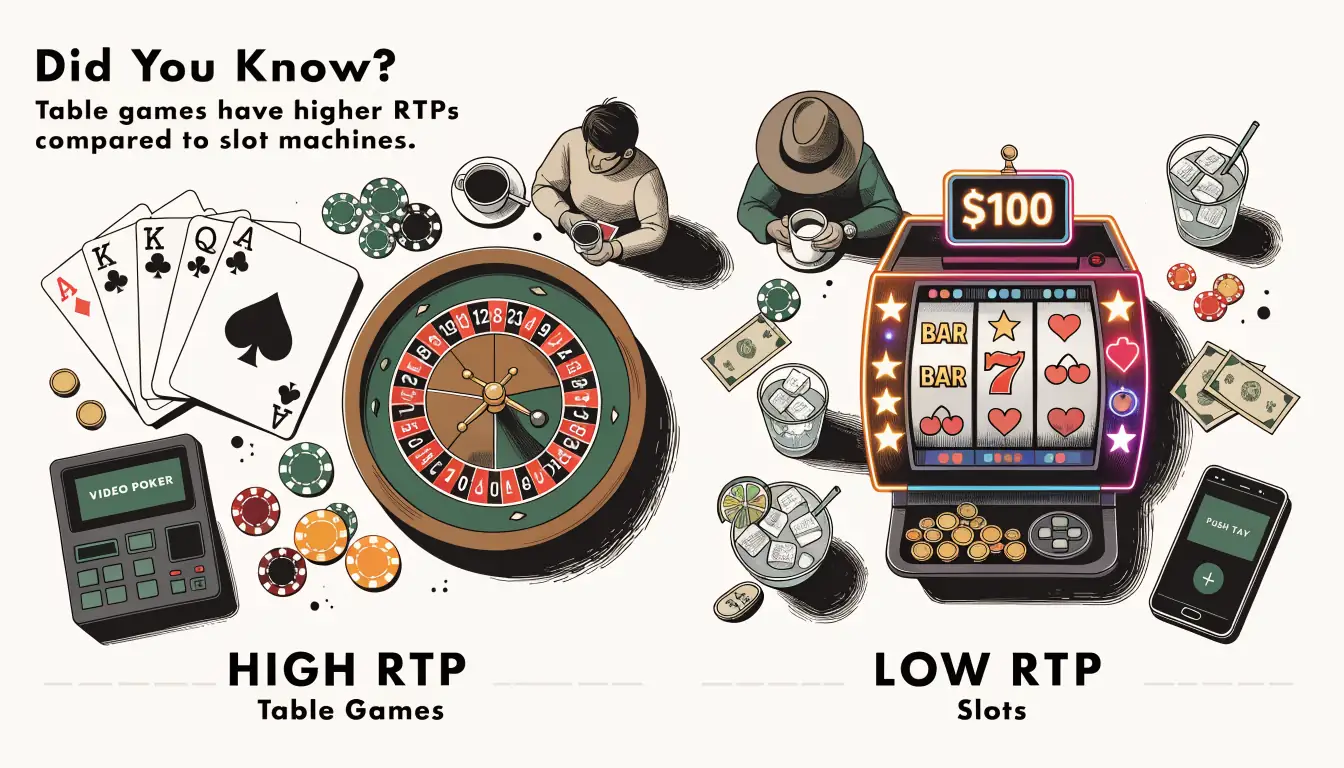
I used to assume table games were somehow "safer" or more regulated than slots because they felt more traditional, more like something you’d see at a real casino floor. Wrong assumption. Same offshore setup, same lack of local licensing, just a different game on the screen.
Bingo and keno
These two get treated a bit differently in practice. Bingo, in particular, along with some keno formats, falls into the category of things that are actually permitted online in Australia – unlike casino-style games or online poker, which aren’t. It’s a strange split if you’re used to thinking of "gambling" as one category, but that’s the reality: some games get a pass, others don’t, and the line isn’t always where you’d expect it.
Keno shows up in pubs and clubs too, run under whatever state framework applies where you are. Online keno through an offshore site is a different animal again, closer to the slots and table games situation than to the permitted local version.
What actually matters before you touch any of this
A few things stay constant no matter which game you’re looking at:
- Verify age before depositing.
- Choose operators that display a clear offshore licence.
- Read player reviews and payout histories.
- Ignore missing age verification.
- Assume branding guarantees safety.
- Play without checking payment method restrictions.
- You need to be 18 to gamble, anywhere, on anything – no exceptions, no “close enough.”
- No Australian regulator is handing out licenses for real-money online casino games to local players, whatever the game.
- The rules differ depending on your state or territory as much as they do on the game type itself.
None of that changes whether you’re spinning a slot, sitting at a virtual blackjack table, or marking off numbers on a bingo card. The game changes. The underlying regulatory gap doesn’t.
What I’d tell anyone bouncing between slots and table games on these platforms: don’t assume one is more "legitimate" than the other just because it feels more classic or more like a real casino. Check the operator, not the game.
Pokies in Australia: What They Are and How They Differ
Ask any Australian what "pokies" means and you’ll get a pub, a club, maybe a casino floor with rows of machines humming away. That’s the word locals use for slot machines you find in physical venues, and it’s a completely different animal from what you’re doing when you spin reels on your phone at midnight.
Pokies are licensed, regulated, and sitting in a building somewhere. State and territory bodies oversee them, venues need permits, and the machines themselves go through compliance checks before anyone’s allowed to switch them on. That’s the whole point — a regulator can walk into the room.
Dispute risk
If an offshore casino mishandles withdrawals, you only have the operator’s own dispute process, which can vary widely and offer little protection.
Online slots don’t work like that. There are no locally licensed online casinos in Australia — none. Every online slot site an Australian plays on is running out of another jurisdiction entirely. Malta, Curacao, wherever the operator decided to set up shop. The games might look identical to what you’d find in a pokies lounge, same flashing symbols, same bonus rounds, but there’s no Australian regulator behind them and never will be under the current setup.

I used to think that distinction didn’t matter much. It does. When something goes wrong at a licensed pokies venue, there’s a body you can complain to. When something goes wrong on an offshore slots site, you’re dealing with whatever dispute process that operator feels like offering you, and it varies wildly from one platform to the next.
Why the gap exists
The short version: Australia regulates gambling that happens on its own soil and largely can’t regulate what happens on servers based overseas. Physical pokies fall squarely under state law. Online slots fall into a grey zone where the operator is offshore, the player is here, and nobody local is licensing the product.
This isn’t a loophole anyone’s actively closing either — offshore platforms keep accepting Australian players, and Australian players keep signing up, because the alternative is simply not having access to online slots at all.
What this site actually is
Worth being blunt here: this isn’t a casino, and nothing here lets you place a bet. No wagers happen on this page, no matter what the search results might have led you to expect. What you’ll find is information — how pokies and online slots compare, what "offshore" actually means in practice, that sort of thing. If you’re picturing a login button somewhere below, there isn’t one.
The one rule that doesn’t bend
Whether you’re talking about a pokies machine in a licensed venue or a slot spinning on an offshore site, the age line is identical: 18. Not "usually 18," not "depends on the venue." Eighteen, everywhere, no exceptions carved out for online platforms just because they’re harder to police.
If you’re under that age, none of this applies to you, and no operator — local or offshore — is allowed to let you through the door.
The takeaway I keep coming back to: pokies and online slots share a look and a name, but they live in entirely separate legal worlds. Knowing which one you’re actually dealing with changes what protections you can expect, and what you can’t.
Cryptocurrency and Online Casinos: The Reality in Australia
I spent a weekend once trying to figure out if I could fund an account with Bitcoin. Forums were full of people swearing it was the smart way to play, faster than a bank transfer, no middleman, no fuss. I got as far as buying a small amount of Litecoin before I actually read what changed in the law and realised I was solving a problem that didn’t need solving — and creating one that did.
The 2023 amendment to the Interactive Gambling Act closed that door specifically. It prohibits credit cards, credit-related products, and digital currency for online wagering, all in the same clause. Bitcoin, Litecoin, Ethereum, whatever coin someone’s pushing on a forum — none of it counts as an acceptable way to fund a real-money account under Australian law anymore. It’s grouped with credit in the same sentence, which tells you how the amendment treats it: not as "money" in the way a debit transfer is, but as another way to gamble with funds you don’t actually have sitting in your account.
Crypto ban
Using digital currency to fund online gambling is prohibited under the 2023 amendment to the Interactive Gambling Act; deposits in Bitcoin or other crypto are illegal.
That amendment sits alongside the credit card bans that came before it — credit cards were already off the table for gambling deposits from June 2020, and the deposit ban was reinforced again on 11 June 2024. Crypto got folded into the same regulatory logic: if it can be used to disguise borrowed money or move value without a clear paper trail, it’s out.
Why "crypto casino" ads don’t match the law
You’ll still see sites branding themselves as Bitcoin-friendly or crypto casinos, usually hosted well outside Australia. Some of them will let you deposit in crypto anyway, because they’re not the ones bound by Australian law — the restriction sits on the payment method within a regulated wagering service, not on every offshore platform’s back-end wallet. That’s a legal grey zone, not a green light. Using it doesn’t make you a criminal — the Interactive Gambling Act targets operators, not players — but it doesn’t make the transaction compliant either, and it strips away whatever protection an above-board payment method might have given you.
I stopped bothering with crypto funding after that. Not because I got caught doing anything — nobody’s chasing players over a wallet transfer — but because the entire appeal was "no middleman," and no middleman also means no one to call when a deposit vanishes into the wrong address or a platform stalls a withdrawal. Banks are annoying. They’re also traceable.
Offshore sites may still advertise crypto‑friendly deposits, but those methods do not comply with Australian law and offer no consumer protection.

If a site is leaning hard on crypto as its main pitch, that’s worth noticing. It’s usually a sign the operator is positioning itself around the restriction rather than within it.
Playing for Real Money: Legal and Practical Considerations
Here’s the thing nobody tells you upfront: playing real casino gambling online through an offshore site isn’t the legal grey zone people assume it is. The site operating the casino is the one breaking Australian law by offering the service. You, sitting on your couch placing bets, aren’t committing a crime. That distinction matters when you’re deciding whether to actually deposit money.
Tax is the question everyone asks eventually, usually right after a win. Short answer: for most casual players, what you scoop off an online casino gambling for real money session isn’t treated as taxable income here. You’re not running a business, you’re not a professional grinder with a system — you’re someone who got lucky on a Friday night. The tax office generally leaves that alone.
Banking is where things actually get annoying, and this is the part that catches people out. Some banks or payment providers will simply decline the transaction the moment they see it’s gambling-related. Doesn’t matter that the casino itself is happy to take your money — your own bank might block it before it even leaves your account. I’ve had a card get flagged for something as small as a top-up, no warning, just a failed payment and a slightly awkward call to customer service afterward.

So before you commit to a session, it’s worth checking:
- Whether your card or transfer method has a history of getting knocked back for this kind of payment
- Whether the casino offers an alternative method if your first choice fails
None of this is a reason to panic. It’s just the practical mess sitting underneath the legal side — one you only really notice once you’ve hit "confirm" and watched it bounce.
Ethereum and Online Gambling: Myths and Facts
I had a mate swear to me that Ethereum was the "loophole" — that because it’s not technically money, no law covers it. He’d read that somewhere on a forum and treated it as gospel. It’s not true, and it wasn’t true when he said it either.
The 2023 amendment to the Interactive Gambling Act didn’t leave room for that argument. It named digital currency directly, alongside credit cards and credit-related products, and shut the door on all three for online wagering. Ethereum falls under that same "digital currency" umbrella as Bitcoin. No special exemption because it runs on a different chain or has smart contracts attached to it.
Some people also assume the credit card ban that landed in June 2024 was only ever about cards, and crypto slipped through some gap in the timing. It didn’t. Both restrictions came out of the same amendment, just enforced along their own paths.
What Ethereum doesn’t get you:
- A legal way around the digital currency restriction
- Anonymity that changes your legal standing
- Access to something a credit card or e-wallet couldn’t already offer, minus the ban
If a platform is pushing ETH deposits as a workaround, that’s a sign to read their terms and conditions carefully, not a sign they’ve found a clever exception. The rule doesn’t care which coin you’re holding.
Online Casino Landscape in Australia 2026
Here’s the thing that trips people up every time: gambling online casino stuff in Australia sits in this weird legal gap that nobody explains properly. The Interactive Gambling Act 2001 makes it a crime to supply online casino games to anyone sitting in Australia. That’s the operator’s problem, not yours.
You, as a player, aren’t breaking any law by logging in and spinning a reel. The Act was written to go after the businesses running these sites, not the people using them. Worth repeating, because I’ve seen forum posts from people convinced they’re one hand of blackjack away from a criminal record. You’re not.
So what does that mean for the actual landscape right now? No locally licensed online casino gambling operation exists in Australia — the licensing framework simply doesn’t extend that far. Every platform you’ll find taking Australian sign-ups is based offshore. That’s not a red flag by itself, it’s just how the market has shaped up since the law targeted supply rather than demand.
Operators who want to stay on the right side of things build their compliance around that gap: age checks, geographic targeting rules, terms and conditions that spell out where they can and can’t legally operate. None of that changes your legal standing as a player. It just tells you which side of the fence the operator is trying to stand on.
Top Australian‑Friendly Online Casinos to Play in 2026
No Australian regulator hands out local licences for real‑money casino play, so every name on any "best casino" list you’ll find is offshore by definition. That’s not a red flag on its own — it’s just how the market sits right now. Fair Go, Lucky Elf, Ozwin and Winz are among the platforms that keep turning up because they’ve been accepting Australian players for years without the operator being charged under the Interactive Gambling Act.
That said, none of this is a recommendation to go deposit tonight. Outback Luck doesn’t run any games, take any bets, or process any wagers — there’s nothing to click "play" on here. What you’ll find on outbackluck.com is a rundown of what these platforms offer, how they’ve behaved, and what other players have said about withdrawals and support.
Reading a review is not the same as vetting a casino yourself. Check the terms and conditions before you sign up, not after. Outback Luck takes no responsibility for losses that happen once you leave this page and start playing elsewhere — that risk is yours, same as it was mine when I ignored my own advice a few times.
You need to be 18 to open an account anywhere on this list. No exceptions, no grey area.
Play smart. Or don’t play.
What is ACMA and how does online gambling regulation work in Australia?
The Australian Communications and Media Authority (ACMA) can order internet service providers to block illegal offshore gambling websites and may notify border protection agencies about the directors or principals of such operators. Australia has no single overarching gambling law or authority; regulation is split between state, territory and federal levels.
Are online casino game providers legally allowed to operate in Australia?
No, supplying online casino games, slots or poker to people in Australia is prohibited under the Interactive Gambling Act 2001. Enforcement has targeted operators rather than players, which is why many offshore sites keep accepting Australian customers despite the law.
Is online poker legal in Australia?
No, online poker services are prohibited under the Interactive Gambling Act 2001, just like online casino games and slot machines. You as a player aren’t criminalised for using such sites, since the law targets operators, not players.