
VPN-Friendly Casino Australia 2026: What Actually Works
 Available in US
Before you connect through a VPN and sign up anywhere, it helps to see which operators are generally recognised in the industry so you can weigh your options with a clearer picture.
Thor Casino is an online casino known within its niche, offering a standard casino experience for players looking for an alternative option.
Betvictor is an established name in the betting and gaming industry, recognised for its long-standing presence in the sector.
Tabcorp is a well-known name in the wagering and gaming space, particularly recognised within the Australian market.
Vegaz Casino is an online casino brand offering a typical range of gaming options for players exploring the space.
Jeetcity Casino is an online casino operating in the international gaming market, catering to players seeking varied casino content.
JustCasino is a straightforward online casino brand aimed at players who want a no-frills gaming experience.
WinSpirit Casino is an online casino positioned within the competitive online gaming landscape.
Betfair is a globally recognised betting exchange and gaming brand with a long-established reputation in the industry.
CasinoStars is an online casino brand offering a general casino gaming experience for interested players.
Lucky Dreams is an online casino known for its presence in the online gaming market, providing a standard casino offering.
Table of Contents
- Why Using a VPN for Online Casinos in Australia Matters
- Understanding Australian Casino Licences and How They Affect VPN‑Friendly Sites
- Choosing the Best VPN for Casino Play: Security, Speed, and Jurisdiction
- Step‑by‑Step Guide: How to Use a VPN to Play at Online Casinos
- What Australia’s 2026 Casino Landscape Looks Like for VPN Users
- Cryptocurrency and Australian Casinos: What VPN Users Must Know
- Which Australian Online Casinos Allow VPN Access?
- Playing Slots Over a VPN: Safety and Responsible Gaming Tips
- Ignition, Bitcoin, and Kirgo Casinos: VPN Compatibility and Regulatory Reality
- Shuffle Casino and VPN Use: What Players Should Verify
Why Using a VPN for Online Casinos in Australia Matters
I got into online casinos the way most people do — a mate sent a link, the site looked fine, the games loaded, and I didn’t ask any questions until my card got declined on a withdrawal. That’s when I started actually reading about how gambling law works here, and it’s messier than you’d think.
There’s no single law that covers gambling in Australia. That surprised me at first, because you’d expect one Commonwealth act to just settle it. Instead, you’ve got regulation split between the states and territories on one side and the federal government on the other, and they don’t cover the same ground. States and territories issue the licences, keep an eye on compliance, and handle enforcement when an operator steps out of line. The federal layer works differently — it’s the Interactive Gambling Act 2001 (Cth) that governs online gambling specifically, and it’s the reason so many casino sites you’ll find through a plain search aren’t actually allowed to serve Australian players at all.
Legal risk
Using a VPN does not exempt you from Australian gambling laws; you could still face penalties if you play on unlicensed sites.
That’s the part nobody explains clearly when you’re just trying to spin a slot after work. The sites exist, the games work, your money goes through — but the legal status of you playing on them is a different question entirely from whether the software runs.
Who’s actually watching
The Australian Communications and Media Authority — ACMA — is the body that polices this online. Its job includes checking advertising compliance, and when it finds an online casino operating without the right approvals, it can get that site blocked at the ISP level. I’ve had it happen: a site I used for months just stopped resolving one day. No warning, no email, just gone. That’s ACMA doing exactly what it’s set up to do — going after what regulators call illegal offshore online casino operations and cutting off access from the network side rather than chasing every individual player.
This is the practical reason a VPN enters the picture at all. It’s not about beating a system for the sake of it. It’s that the block happens at the connection level, based on where ACMA and the ISPs think you’re connecting from. Change that, and the block often doesn’t apply — at least not through that particular pathway. I’m not going to pretend that’s a legal grey area that resolves itself just because the page loads; it doesn’t. It just explains why the technical workaround exists and why so many players reach for one without fully understanding what they’re opting into.
Meanwhile, the state and territory regulators are doing something different. They’re not blocking access — they’re granting licences to the operators that do things properly, and then monitoring whether those operators keep doing things properly. Two separate jobs, two separate sets of consequences, and if you only pay attention to one of them you’ll misread the whole picture.
The fines are real, and they’re not small
I used to assume enforcement in this space was mostly bark, not bite. Then I looked at what’s actually happened.
Tabcorp — not some fly-by-night offshore brand, a major licensed Australian operator — was fined $4.6 million by the Victorian Gambling and Casino Control Commission in August 2024. That’s not a slap on the wrist. That’s a regulator with teeth, going after a company that’s supposed to know exactly where the lines are.
Tabcorp was fined $4.6 million by the Victorian Gambling and Casino Control Commission for regulatory breaches.
Operators violating the credit‑card ban can be fined up to $247,500.
And it’s not only about how a casino runs its games. Payment rules carry their own penalties. Non-compliance with the credit-card ban on online gambling can bring fines up to $247,500. I didn’t know that number existed until I went looking, and it changed how I think about which sites I’d even consider using. If regulators are willing to fine a household name millions of dollars and threaten quarter-million-dollar penalties over payment methods, that tells you enforcement here isn’t theoretical.
None of that is a reason to panic every time you open a casino app. But it’s context. The regulatory environment isn’t decorative — it’s actively enforced, on both licensed operators and the payment rails around them.
Why players end up reaching for a VPN anyway
Here’s the honest version of why I, and a lot of people I’ve talked to about this, started using a VPN for casino play in the first place. It usually isn’t about chasing something illegal on purpose. It’s one of a few things:
- A site you’d used for a while suddenly stops loading, and the fastest explanation online is “use a VPN,” so you do, without digging into why the block happened.
- You’ve heard that offshore sites have better slot libraries or looser terms than anything licensed locally, and a VPN feels like the key to that door.
- You’re trying to access a site you already had funds sitting in in, and disconnecting isn’t as simple as walking away.
I’ve done all three at different points. The slot library one is the trap I fell into hardest — spent a few months on a site with a huge game catalogue, no real sense of who licensed it or whether they’d honour a big withdrawal, just because the VPN made it reachable. It reached fine. Getting paid was a different story, and that’s a problem a VPN can’t fix, because a VPN only changes your network route — it does nothing about whether the operator on the other end is actually solvent, licensed, or willing to pay you.
That’s the gap this whole guide is built around. A VPN gets you past a network-level block. It says nothing about whether the site you land on afterward is one you should trust with your money.
The legal reality worth sitting with
I’m not going to tell you a VPN is a green light, because it isn’t, and dressing that up would be exactly the kind of "guaranteed" framing that gets casinos in trouble for false advertising in the first place. What I can tell you is what’s actually true: Australia regulates gambling through a patchwork of state, territory, and federal rules rather than one clean statute, ACMA enforces the online piece by blocking non-compliant sites at the ISP level, and the state regulators separately license and police the operators allowed to run legally. A VPN interacts with the first of those. It has no bearing on the second or third.
If you’re going to use one anyway — and plenty of players will, myself included at times — the sections ahead walk through what actually matters once you’re past the block: how licensing tells you whether an operator is worth trusting, what a VPN needs to offer beyond just changing your apparent location, and how to set the whole thing up without walking into the same withdrawal mess I did.
VPN only bypasses block
A VPN gets you past the network‑level block, but it doesn’t guarantee the casino is safe or legal.
Short version, before we get into any of that: the block is real, the enforcement behind it is real, and getting through it is the easy part. Staying safe on the other side is where the actual work is.
Understanding Australian Casino Licences and How They Affect VPN‑Friendly Sites
Before you even open a VPN app, there’s a question worth answering first: who actually licensed the site you’re about to play on. I used to skip this step entirely. Signed up, deposited, played. Only later did I start scrolling to the footer of every casino site and actually reading what was printed there in size-8 font.
A casino licence is an official permission from a regulatory authority to run the operation legally. That’s it, no more mystery than a permit to run any other business — except this one comes with a lot more scrutiny attached. Before an operator gets that permission, it goes through background checks and financial audits meant to weed out anyone who can’t be trusted with other people’s money. Regulators aren’t just checking a box here; they’re looking at whether the people behind the site have a history worth worrying about, and whether the company has the financial footing to actually pay out when someone wins.
Operator licences aren’t a one-size-fits-all thing either. Casinos, retail wagering, lotteries, keno, instant lotteries — each of these needs its own licence. So when you’re looking at a "casino," you want to see that it’s actually licensed as one, not operating under some vaguer permission that doesn’t cover table games or slots the way you’d expect.
What a licence is actually supposed to guarantee
Here’s the part that matters when you’re choosing where to play, VPN or not: a licence is meant to ensure games are fair, that the platform is secure, and that the operator follows player protection and responsible gambling guidelines. None of that happens automatically just because a site looks polished. I’ve seen plenty of casinos with slick design and a "licensed and regulated" badge sitting in the footer that, on closer look, pointed to nothing verifiable at all.
The badge is not the licence. The badge is a picture of a badge. What you actually need is the licence number, the name of the regulator, and ideally a working link where you can check that the licence is current and applies to this specific operator — not some parent company three shell layers up.
Legitimate operators make this easy. You can verify a casino’s legitimacy by checking its licensing information directly on the website, usually in the footer or on a dedicated "about us" or "licensing" page. If that information is buried, vague, or missing entirely, that’s your answer right there — no VPN setting is going to fix a site that never had proper oversight to begin with.
Why audits are the part nobody talks about
Getting licensed once isn’t the end of it. Licensed casinos undergo regular independent audits of their games and software to make sure the fairness holds up over time, not just on launch day. This is the difference between a site that got approved once and forgot about it, and one that keeps proving itself. When a casino mentions audit reports or independent testing bodies by name, that’s worth more than any amount of marketing copy about "safe and secure gaming."
There’s also a quieter detail that I didn’t appreciate until someone explained it to me plainly: licensed operators are required to keep player funds in separate accounts from the casino’s own operating money. Segregated accounts. It sounds like a technicality until you think about what it actually protects against — a casino running into financial trouble and your balance disappearing along with it. If a site can’t tell you clearly that your money sits apart from theirs, assume it doesn’t.
How this connects to picking a VPN-compatible operator
None of this licensing detail is separate from the VPN question — it’s the foundation of it. A site that’s properly licensed, audited, and transparent about where your money sits is also, generally, a site that has clear policies on things like VPN use, identity verification, and account access from outside your usual location. The operators worth using are the ones where you’re not guessing about any of this.
A rough checklist before you connect:
- Licence number and regulator name are visible and specific to the operator, not a parent brand.
- The licensing page links somewhere you can actually confirm it, not just a static image.
- Independent audit results or testing bodies are mentioned by name.
- Terms mention how player funds are held, ideally confirming segregated accounts.
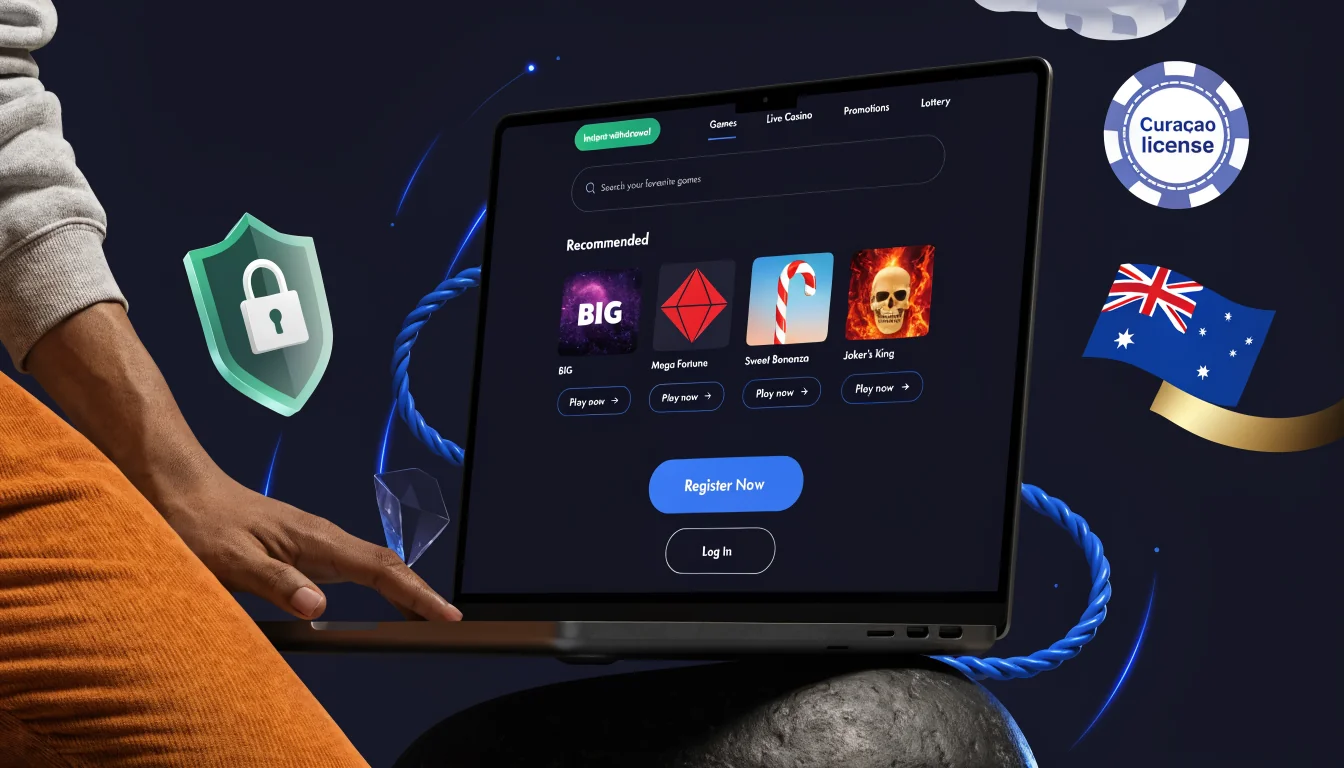
Skip this and you’re trusting a login page and a payment button with your money on nothing but hope. Do it once, properly, and you stop having to think about it every time you log in.
Choosing the Best VPN for Casino Play: Security, Speed, and Jurisdiction
I used to think any VPN would do. Pick the cheapest one, hit connect, done. Then I sat through a buffering slot reel for ten minutes because the server I’d picked was overloaded, and I realised the "best casino VPN" isn’t a single product — it’s a short list of things that actually matter, and everything else is marketing noise.
- Verify the VPN uses strong encryption (e.g., AES‑256).
- Check that the provider has undergone an independent audit.
- Ensure the VPN’s jurisdiction has strong privacy laws.
- Choose the cheapest VPN without researching its logs policy.
- Connect to overloaded servers that cause lag.
- Assume a VPN makes an unlicensed casino trustworthy.
Here’s what I actually check now.
Encryption that matches what the casino itself uses

Licensed sites employ bank-level data encryption to protect personal and transaction information. That’s the standard the casino is held to. Your VPN needs to sit at the same level, not below it. If a VPN provider can’t tell you plainly what encryption protocol it runs, that’s your answer — move on.
Independent audits, not just claims
Licensed casinos undergo regular independent audits of their games and software to ensure fairness. Apply the same test to your VPN. Has anyone outside the company actually looked at their no-logs claim, or is it just a line on the homepage? A provider that’s been through a real third-party audit will say so specifically, not just wave the word "audited" at you.
Where your data actually goes
Regulators scrutinise payment processing and player data storage — that’s true for the casino, and it should be true for how you think about your VPN too. Where is the company based, what do they log, and who can request that data? A VPN jurisdiction with weak privacy law can undo everything the casino’s own security is doing on its end.
Segregated funds, separate concerns
Player funds must be kept in separate (segregated) accounts from the casino’s own money. That’s the casino’s job, not the VPN’s — but it’s worth knowing the split, because it tells you where your VPN’s job actually ends. A VPN protects your connection and location. It doesn’t protect your deposit. Don’t expect it to.
Speed you can actually play on
None of the above matters if the server drops your connection mid-spin. I’ve had that happen — reel stuck, page frozen, no idea if the bet even registered. Look for a VPN with a wide, stable server network and no aggressive bandwidth throttling. Test it on a free table or low stake first, not on a session where you actually care about the outcome.
A quick checklist before you commit
| Check | Why it matters |
|---|---|
| Encryption standard stated clearly | Should match or exceed what licensed sites already use |
| Independent audit on record | Claims without proof aren’t worth much |
| Clear data-handling policy | Matches the scrutiny regulators apply to casinos themselves |
| Stable, fast servers | Dropped connections cost you clarity on your own bets |
| No conflict with the casino’s own tools | Self-exclusion and responsible gaming settings should still work normally through the VPN |
Self‑exclusion and responsible‑gaming limits are tied to your casino account, so a VPN won’t bypass them.
That last point trips people up. Licensed sites must offer responsible gaming tools such as self-exclusion and clear rules, and those tools are tied to your account, not your IP address. A VPN changes where you appear to be connecting from — it doesn’t touch the limits you’ve set on your own account. If you’ve switched those on, they follow you.
The short version: a VPN worth using looks as boring and well-documented as the casino licence you’re checking it against. If it reads like an ad, it probably is one.
Step‑by‑Step Guide: How to Use a VPN to Play at Online Casinos
First time I connected a VPN just to load a casino site, I overthought it. Picked a random server, wondered why the page still wouldn’t load, restarted my router twice. It’s simpler than that once you understand what’s actually happening: ACMA blocks non-compliant online casinos through ISPs, so your connection is being filtered at the network level, not by the casino itself. A VPN routes around that filter. That’s the whole trick.
Here’s the actual sequence I use now.
1. Install the VPN before you go anywhere near the casino site. Open the app, log in, don’t touch the browser yet. If you land on a blocked casino first and then try to fix it with a VPN mid-session, you’ll usually just get a broken page or a login loop.
2. Connect to a server, then check it actually took. Most VPN apps show a little status indicator, but I don’t trust that alone — I open a separate tab and check my IP against what the app claims. Takes ten seconds, saves you from playing a whole session thinking you’re "protected" when the connection quietly dropped back to your real IP.
3. Clear cookies or use a private browser window before logging in. Casinos remember your last location. If you were logged in without a VPN yesterday, the site might still flag inconsistencies today even with the VPN running.
4. Log in and watch what the casino asks for. If it wants ID verification or address confirmation early, that’s normal — legitimate operators run these checks regardless of VPN use. It’s not the VPN causing extra scrutiny; it’s standard account security.
5. Keep the same server for the whole session. Switching servers mid-game, mid-deposit, or mid-withdrawal is the fastest way to get a payment held for "review." I learned this after a withdrawal sat pending for days because I’d hopped between two server locations in one evening.
Where compliance actually matters here

Because there’s no single overarching statute regulating gambling in Australia, obligations come from a mix of federal and state rules layered on top of each other. The VPN doesn’t exempt you from any of it. The Interactive Gambling Act 2001 (Cth) still governs how the casino is allowed to operate and advertise, whichever country’s licence sits behind it. And the payment side has its own hard line: no credit cards for online gambling, full stop. Non-compliance on that front carries fines up to $247,500 for the operator — which is exactly why a casino that quietly lets you charge a credit card is a casino you should be nervous about, VPN or not.
So the VPN handles access. It doesn’t handle whether the site is playing straight with your money. Those are two separate questions, and mixing them up is how people end up trusting a site just because it loaded.
One last thing I do every time: bookmark the server location that worked, note the date, and re-check it a few weeks later. Blocks shift, server IPs get flagged and swapped by the VPN provider, and what worked in January can silently stop working by March.
What Australia’s 2026 Casino Landscape Looks Like for VPN Users
Here’s the thing nobody tells you when you’re setting up a VPN for the first time: the licence a casino runs on today might not be the same licence it’s running on next year. Some of these things are granted forever, others come with an expiry date stamped on them somewhere between 2022 and 2093. I’ve seen both. What that means practically is that a site you trusted last year could be operating on borrowed time, and you’d never know unless you actually go and check.
Licence expiry risk
Casino licences can expire or be revoked, so a site that works today may become illegal tomorrow.
By 2026, expect that checking to get harder to skip. More operators will be sitting closer to their renewal windows, which means more scrutiny, more paperwork behind the scenes, and — from a player’s side — more friction at signup. That friction isn’t the casino being difficult. It’s the licence holder covering itself.
Identity checks aren’t going away
If you thought a VPN would let you skip the "who are you" part of signing up, forget it. Verification still means sending over your personal details and photos of your documents, VPN or no VPN. I used to think this was the casino being nosy. It’s not — it’s the price of the operator keeping its licence. A site that skips this step is a site that’s cutting corners somewhere else too, and that’s the one to walk away from, not the one that asks for your ID twice.
Round-the-clock watching
Licensed Australian-facing casinos already run monitoring on suspicious activity around the clock, and that’s not slowing down going into 2026. A VPN changes your visible location, not your account behaviour. Odd betting patterns, mismatched documents, login attempts from ten different countries in a week — that stuff still gets flagged, VPN or not.
What this means for you as a VPN user
- Licences expiring or renewing means the “trusted list” of operators will keep shifting. Recheck before you deposit, not after.
- Identity verification is a permanent part of the process, not a hurdle that disappears with a server switch.
- Constant activity monitoring means a VPN gets you through the door, not around the rules once you’re inside.
None of this is really about the VPN. It’s about the licence sitting behind whichever casino you pick. Get that part wrong and the VPN was never going to save you anyway.
Cryptocurrency and Australian Casinos: What VPN Users Must Know
I’ll save you the search: yes, there’s a "vpn friendly crypto casino" out there that’ll take your Bitcoin no questions asked. No, that doesn’t make it legal for you to use one from Australia. Those are two completely different things, and mixing them up is how people end up with frozen funds and no one to complain to.
Amendments to the Interactive Gambling Act in 2024 banned the use of cryptocurrency for gambling outright. Doesn’t matter if your VPN has you routed through a server in Malta. The rule follows the player, not the IP address. Sites still advertising a "no KYC crypto casino" experience to Australians are operating outside that framework — and if they’re skipping identity checks entirely, that’s your first red flag, not a selling point.
Here’s the part people miss: even before the ban, crypto deposits at licensed-adjacent operators were never as anonymous as the marketing suggested. The AML/CTF Act 2006 requires operators to enrol with AUSTRAC, run KYC on their players, keep records, maintain AML programmes, and report anything that looks like suspicious transaction activity. A genuine crypto casino VPN setup was always going to hit that wall eventually — the "anonymous" bit was marketing, not architecture.
Regulators also scrutinise how payment processing and player data are actually stored, which is exactly the kind of scrutiny that offshore crypto operators tend to avoid talking about. If a site’s entire pitch is "we don’t ask questions," ask yourself who’s actually protecting your money if something goes wrong.
Crypto ban
After the 2024 amendment, using cryptocurrency for gambling in Australia is illegal, and a VPN cannot change that.
Practical takeaway:
- A VPN can get you past a geo-block. It can’t make a crypto deposit compliant.
- No-KYC crypto sites sit furthest from any recognised licensing or AML oversight — that’s not a technicality, it’s the whole risk.
- If crypto is your priority, the safer move is checking whether an operator has any real licence and AML programme, not how fast it processes coins.
Cheap workaround, expensive lesson if it goes wrong.
Which Australian Online Casinos Allow VPN Access?

I keep a shortlist of operators I actually return to, and the thing they have in common isn’t a flashy welcome offer — it’s that they don’t quietly ban you the moment your IP looks foreign. Names like Ozwin, Lucky Elf and NeoSpin show up often enough in player forums that I gave them a proper look myself, checking what licence they run under and whether their terms even mention VPN use.
Here’s the part people skip: a casino "allowing" a VPN isn’t a stated policy on most sites. It’s more that their terms don’t forbid it outright, and their verification process is solid enough that it doesn’t matter how you connected. That’s the real signal to look for — not a banner that says "VPN friendly," which any operator can slap on a page for free.
Before you trust any of them with a deposit, do what I do now and didn’t do for years: open the footer, find the licensing information, and actually read it. An operator licence is the official permission a regulator hands out for a casino to run legally — it’s not decoration. If a site can’t tell you plainly who licensed it, that’s your answer already, VPN or not.
What separates the operators worth using from the ones I’ve walked away from is what happens after signup. A properly licensed casino runs identity checks regardless of your location, which sounds annoying until you realise it’s the same check protecting your money from someone else pretending to be you. That verification layer matters more than server location — it’s the thing standing between "this site works with my VPN" and "this site actually pays out."
So the honest checklist is short: confirm the licence, confirm it’s checkable on their own site, and treat any operator that skips that step as a red flag, no matter how many forum threads swear it’s VPN friendly.
Playing Slots Over a VPN: Safety and Responsible Gaming Tips
Slots are where a VPN connection matters most, because you’re clicking fast, chasing that next spin, and not exactly in the mood to read fine print. I get it. I’ve been there, three tabs open, server switched, telling myself "just ten more spins." That’s exactly when you need the guardrails already in place, not decided on the fly.
Before you even load a game, set your limits. A licensed casino gives you deposit limits and break options for a reason — use them while you’re still thinking clearly, not after you’ve blown through your budget. Set the number, walk away from the keyboard, come back to it later if you have to.
If slots start feeling less like fun and more like a routine you can’t skip, that’s the moment for self‑exclusion programs. Every licensed site has to offer them, along with clear rules about how deposits, withdrawals and account limits actually work. Read those rules once, properly, before you’re deep into a session.
A VPN changes where your connection appears to come from. It doesn’t change how the game pays out, and it definitely doesn’t change how your own limits work. Set them first. Play second.
Ignition, Bitcoin, and Kirgo Casinos: VPN Compatibility and Regulatory Reality
People ask about Ignition, Bitcoin-branded casinos, and Kirgo more than any other names when they’re figuring out an Ignition casino VPN setup or hunting for a VPN-friendly Bitcoin casino. I get why. These sites market themselves as the answer for players locked out at home. The reality is messier.
None of them run under an Australian licence. That alone tells you they sit outside the framework this whole article is built on — no local audits, no player-fund segregation you can verify, no direct line to a regulator if something goes wrong. A VPN gets you through the door, but it doesn’t hand you protections that were never there.
The crypto angle makes it worse, not better. Since the 2024 amendments to the Interactive Gambling Act, using digital currency for gambling is off the table for Australian players, full stop. A "Bitcoin casino" pitching itself as VPN-friendly is really pitching you a workaround for something the law closed. Kirgo’s crypto-first setup runs into the same wall.
And regulators aren’t bluffing about enforcement — Tabcorp, a licensed operator, still copped a $4.6 million fine from the Victorian Gambling and Casino Control Commission in August 2024. If that’s what happens inside the system, staying outside it with a VPN and crypto wallet isn’t the safe shortcut it looks like.
Shuffle Casino and VPN Use: What Players Should Verify
Shuffle came up a few times in forum threads I read while sorting this whole VPN mess out, so I looked into it before touching my own money. Here’s what I actually checked, not what the site’s homepage told me to believe.
Before you connect through a VPN and deposit anything, run through this:
- Audit trail. Legitimate operators get their games and software independently audited on a regular basis. If Shuffle can’t show you who audits them and when, that’s your answer.
- Where your money sits. Your funds should be in a segregated account, separate from the casino’s operating cash. If that’s not stated anywhere, don’t assume it.
- Licence details match the footer claim. Don’t take a logo at face value — click through and confirm it links somewhere real.
If any of these come up empty, close the tab. No VPN setting fixes a bad operator.
How do states differ in their approach to online gambling regulations?
States and territories are the ones granting operator licences and monitoring compliance, while the federal Interactive Gambling Act 2001 governs online gambling specifically. So you’re dealing with two separate layers: state-issued licences on one side, and federal enforcement against unlicensed offshore operators on the other.
What is ACMA?
ACMA, the Australian Communications and Media Authority, is the body policing online gambling in Australia. It checks advertising compliance and can get non-compliant offshore casinos blocked at the ISP level rather than chasing individual players.
What does the IGA actually prohibit?
The Interactive Gambling Act 2001 (Cth) governs online gambling and is the reason many casino sites found through a plain search aren’t legally allowed to serve Australian players. Following 2024 amendments, it also prohibits the use of cryptocurrency for gambling.
What state laws also apply?
State and territory regulators handle licensing, compliance monitoring and enforcement for casinos, retail wagering, lotteries, keno and instant lotteries. They can also issue substantial fines — for example, Tabcorp was fined $4.6 million by the Victorian Gambling and Casino Control Commission in August 2024.
Which licences should the best australian casino online hold?
You should look for a valid operator licence issued by a state or territory regulator, since these require background checks, financial audits and proof of no outstanding debts. A properly licensed site will also undergo regular independent audits of its games and software for fairness.
Published by the Outback Luck team.