
Safe Online Casino Australia 2026: What to Check
 Available in US
Choosing a safe online casino in Australia means looking beyond flashy promos to find operators with a solid reputation and dependable player experience. This list gives you a quick, honest snapshot of each option to help narrow your search.
Thor Casino is a recognisable name in the online casino space, known for catering to players looking for a themed, engaging gaming environment.
Betvictor is an established betting and gaming brand with a long-standing presence in the industry, appealing to players who value a well-known name.
Tabcorp is a major, established name in Australian wagering and gaming, recognised for its long history in the local market.
Vegaz Casino positions itself as a modern online casino option for players seeking a straightforward, casino-focused experience.
Jeetcity Casino is an online casino brand offering a general gaming experience for players exploring different platforms.
JustCasino is a straightforward online casino option, appealing to players who prefer a simple, no-frills platform name.
WinSpirit Casino is an online casino brand aimed at players looking for a dedicated casino gaming experience.
Betfair is a globally recognised betting exchange and gaming brand, known for its long-standing presence in the wagering industry.
CasinoStars is an online casino brand catering to players interested in a casino-themed gaming platform.
Lucky Dreams is an online casino option for players seeking a casino brand with a dream-themed identity.
Table of Contents
- Why "Safe Online Casino Australia 2026" Isn’t Just a Buzzword
- Understanding Casino Licensing and Regulation in Australia
- How to Spot Legit Australian Casino Sites
- PayID Deposits: Safe Way to Fund Your Aussie Casino Play
- Pay & Play Safely: Avoiding Credit Cards and Crypto
- Playing for Real Money: What Safety Means for Your Funds
- Finding the Best Safe Online Casino: What to Look For
- Mobile Gambling on the Go: Keeping Your Experience Secure
- Quick Checklist: Is an Aussie Casino Truly Safe?
- Safe Games: Fairness and Audits in Australian Online Casinos
Why "Safe Online Casino Australia 2026" Isn’t Just a Buzzword
I used to skim past the word "safe" on casino sites the way you skim past cookie pop-ups. Every operator says it. Every review site repeats it. It stopped meaning anything to me for a while, right up until I watched a mate wait weeks for a withdrawal from a site that had "100% safe" written across the top banner. That’s when I started actually checking what sits behind the word instead of trusting it.
Here’s the thing about the Australian market specifically: it’s not one rulebook. Online gambling is regulated federally through the Interactive Gambling Act 2001 (Cth), but the actual policing happens on two levels at once. The Australian Communications and Media Authority handles advertising compliance, and when a site is operating illegally from offshore, ACMA can get it blocked through local internet providers. Separately, state gambling regulators grant the licences, check compliance, and take enforcement action when an operator steps out of line. Two different bodies, two different jobs, and a casino can be in trouble with one and not the other.
This isn’t theoretical box-ticking. In August 2024 the Victorian Gambling and Casino Control Commission fined Tabcorp $4.6 million. That’s not some fly-by-night offshore operator — that’s one of the biggest names in Australian gambling, penalised by its own regulator. If a company that size can get hit, "big and well-known" was never the safety signal I thought it was.
Why this actually matters to your money, not just your conscience
Safety in this context isn’t an abstract ethics box. It’s whether your deposit is protected, whether the games are running fair math, and whether there’s a real body you can complain to if something goes wrong. A casino with no licence, or one hiding which regulator covers it, has none of that. You’re trusting a website with your bank details and hoping for the best.
Problem gambling in Australia affects roughly 0.5‑1.0% of adults, with another 1.4‑2.1% considered at risk.
There’s also a human cost that’s easy to ignore when you’re just trying to have a punt on a Friday night. Problem gambling in Australia is estimated to affect somewhere between 0.5 and 1.0% of adults, with another 1.4 to 2.1% considered at risk. That’s not a huge slice of the population, but it’s not nothing either, and a genuinely safe operator builds tools into the platform to deal with that reality rather than pretending it doesn’t exist.
So when I say "safe" in this piece, I mean something specific:
- A licence from a regulator that actually enforces its rules, not just issues a certificate.
- Advertising and account-opening practices that follow the federal rules, not just local optics.
- Payment and identity checks that exist because the law requires them, not as a marketing flourish.
- Fair, audited games running on software that’s been checked by someone other than the casino itself.
None of that is glamorous. None of it makes for a flashy homepage. But it’s the difference between a casino that treats "safe" as a checkbox and one that treats it as a legal obligation with a regulator watching over its shoulder. The rest of this guide walks through each of those pieces — starting with how the licensing system actually works, because that’s the part almost nobody explains properly.
Understanding Casino Licensing and Regulation in Australia
First thing I had to unlearn: there’s no single rulebook you can pull up and read cover to cover. I spent an evening looking for "the Australian gambling act" like it was one document, and it just doesn’t exist that way. Gambling here gets regulated at both the state and territory level and at the federal level, and those two layers don’t always talk about the same things.
That split matters more than it sounds. It means the licence a casino holds tells you who’s actually watching it, and different regulators care about different pieces of the puzzle.
Who actually issues these licences
Operator licences cover a spread of activities — casinos, retail wagering, lotteries, keno, instant lotteries. Each of these can sit under a different regulator depending on where the operator is based. You’ll see names like Liquor and Gaming New South Wales, the NSW Independent Casino Commission, the Gaming and Wagering Commission of Western Australia, the Victorian Gambling and Casino Control Commission, or the Independent Liquor & Gaming Authority, and which one applies depends entirely on the state the operator sits in and what kind of gambling service they’re running.
That’s the state/territory side. At the federal level, the framework that matters is the Interactive Gambling Act 2001 (Cth), and the body enforcing advertising and access compliance around it is the Australian Communications and Media Authority.
Offshore licences vs Australian regulation
Online casinos that serve Australian players from overseas are usually licensed in jurisdictions such as Malta or Curaçao. Those licences are not overseen by Australian regulators; instead the Australian Communications and Media Authority (ACMA) may block the site through ISPs if it operates illegally.
Here’s the part that trips people up: an online casino serving Australian players from overseas isn’t operating under any of these Australian regulators at all. It’s licensed somewhere else entirely — Malta, Curaçao, wherever — and the Australian framework’s job at that point is mostly to block it, not oversee it. So "licensed" only means something safety-wise when you know which regulator is actually behind that licence and what jurisdiction it belongs to.
What a licence is actually supposed to guarantee
A casino licence is an official permission from a regulatory authority to operate legally — that’s the plain definition, but it’s worth sitting with what sits behind it. Getting one isn’t a formality. The licensing process involves background checks and financial audits, meant to establish that the people running the operation are who they say they are and that the business is financially sound enough not to disappear with player funds.
Once granted, the licence is supposed to mean three things are in place:
- the games are fair and secure
- the operator follows player protection rules
- responsible gambling measures are actually built into the platform, not just mentioned in a footer
None of that is a one-time check. Licensed casinos undergo regular independent audits of their games and software, so the fairness question doesn’t get settled once and forgotten — it’s supposed to be revisited.
Licences aren’t all the same length
One thing I didn’t expect: licences aren’t uniform in how long they last. Some are perpetual, others carry expiry dates, and across the board those dates range anywhere from 2022 out to 2093. That’s a wide spread, and it tells you licensing terms get negotiated case by case rather than handed out on a fixed template. It also means a licence number alone doesn’t tell you much — you’d want to know whether it’s current, not just whether it exists.
Checking this yourself
You don’t need to become a compliance officer to do a basic check. Players can verify a casino’s legitimacy by looking at the licensing information published on the site itself — usually somewhere in the footer, sometimes on a dedicated "about" or "licence" page. What you’re looking for is a specific regulator name and a licence number, not vague language like "fully licensed and regulated" with nothing to back it up.
That’s really the line I use now: does the site name an actual regulator I can look up, or does it just say the word "licensed" and hope I don’t ask which one.
Why this fragmented system still adds up to something
It’s tempting to read "no single overarching statute" as a weakness, and in some ways it is — it’s harder to get a clean picture as an outsider. But the flip side is that responsibilities are split on purpose. State and territory regulators handle licensing, day-to-day compliance and enforcement for operators based in their patch. The federal layer, through the Interactive Gambling Act 2001 (Cth) and ACMA’s oversight, deals with the parts that don’t respect state borders — advertising standards, blocking access to non-compliant offshore operators, that kind of thing.

So when I’m sizing up whether a site is worth trusting, I’m not looking for one seal of approval. I’m looking for evidence that both layers are functioning: a named regulator tied to an actual Australian licence, and signs that the operator isn’t just parked offshore hoping ACMA doesn’t notice.
Everything else in this guide — spotting fake licence claims, checking payment methods, understanding what happens to your money once it’s deposited — builds on this one distinction. Who licensed the casino, and does that licence actually mean anything for a player sitting in Australia. Get that wrong and the rest of the checklist doesn’t matter much.
How to Spot Legit Australian Casino Sites
I used to scroll to the footer, see a logo that looked official enough, and call it a day. That’s not a check. That’s hoping.
Here’s what actually works.
Read the licensing text, not the badge. Anyone can paste a logo. Scroll to the bottom of the site and find the actual licensing statement — it should name the licensing body, not just show an icon. If a casino won’t tell you plainly who licenses them, that’s your answer already.
Credit‑card ban
Accepting credit‑card deposits breaches the Interactive Gambling Act and can result in fines up to $247,500.
Check who’s actually behind the site. Since Australia doesn’t license domestic online casino gambling the way, say, sports wagering is licensed, most sites you’ll find serving Aussie players operate offshore. That’s not automatically a red flag — but it means the licensing paperwork matters more, not less. If the site is vague about jurisdiction, walk away.
Look for audit disclosures. Licensed operators get their games and software independently audited on a regular basis. That’s not marketing copy — it’s a real process that leaves a paper trail. A legit site will usually reference this somewhere, even briefly. If there’s nothing about game fairness testing anywhere on the site, that’s worth noticing.
Watch how they talk about payments. This one caught me off guard the first time. A site that still lets you punch in a credit card number for a deposit is already breaking the rules — operators who don’t comply with the credit-card ban can face fines up to $247,500. So if a casino is casually offering credit-card deposits like it’s nothing, either they don’t know the rules or they don’t care. Neither is reassuring.
Notice if the site is even reachable. ACMA doesn’t just write letters — it actively blocks non-compliant online casinos through ISPs when it identifies illegal offshore operators. If you’re bouncing between mirror domains or the "real" site keeps changing addresses, that’s not a coincidence. That’s a casino dodging a block.
A quick gut-check list
- Licensing statement is specific, not just a logo
- Independent audit or fairness testing is mentioned somewhere
- No credit-card deposit option offered
- The domain has been stable, not hopping between mirrors
- Terms and responsible gambling info aren’t buried three clicks deep
None of these alone proves much. Together, they tell you fast whether you’re dealing with an operator who’s actually built for scrutiny — or one betting you won’t look closely.
I still check every one of these before I deposit anywhere new. Takes maybe five minutes. Cheaper lesson than the one I learned the first time I didn’t bother.
PayID Deposits: Safe Way to Fund Your Aussie Casino Play
PayID is the first thing I check now before I even look at bonuses. Old habit, learned the hard way. If a site doesn’t offer it, I start asking why.
Here’s what PayID actually does: it links your deposit straight to your bank account using something you already have, like a phone number or email, instead of card numbers sitting on some casino’s server. No card, no crypto wallet, nothing floating around that can get skimmed. The transaction runs through your own bank’s systems, and your bank already knows who you are because you had to prove it when you opened the account.
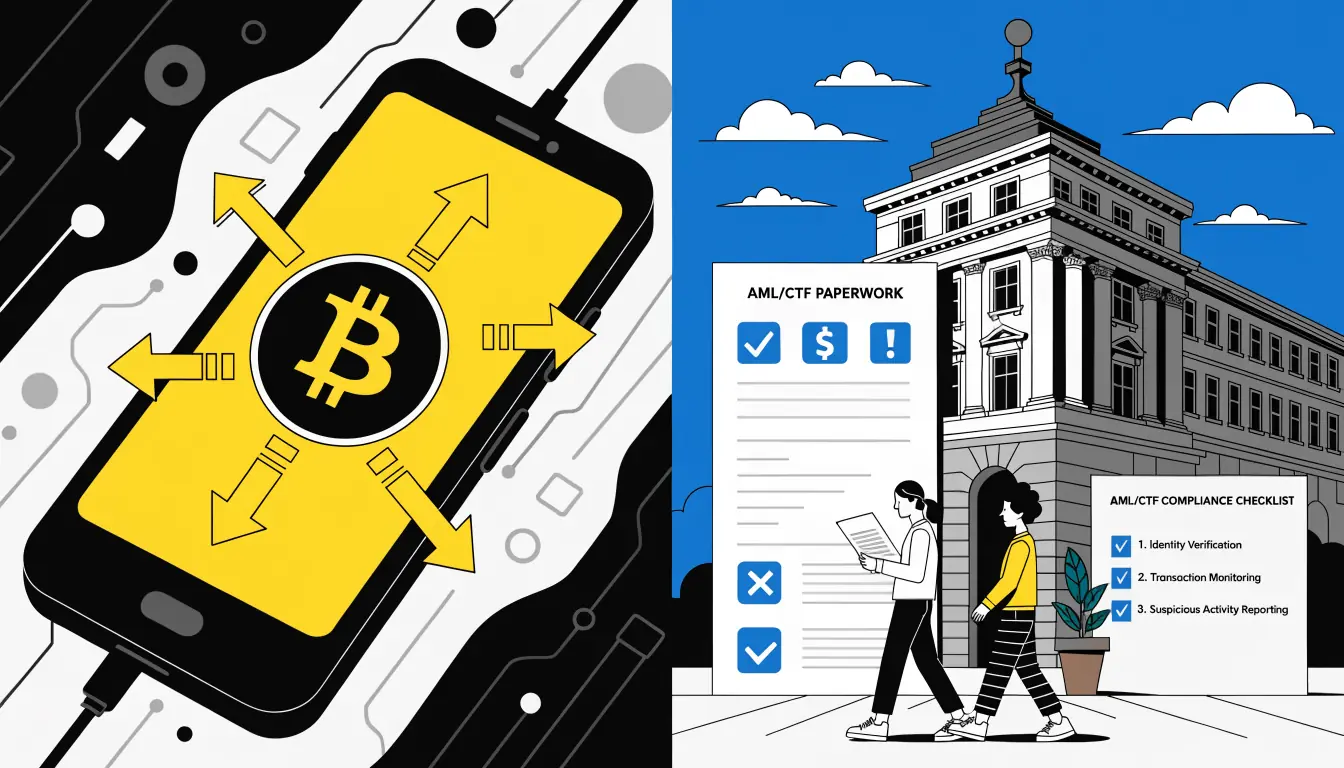
That last part matters more than people realise. Every gambling service in Australia operating under the AML/CTF Act 2006 has to enrol with AUSTRAC, run Know Your Customer checks, keep records, maintain an AML programme, and report anything suspicious. PayID doesn’t replace that process — the casino still has to do all of it — but it makes the money trail cleaner from the start. Your bank has already verified you. The casino’s checks build on top of that instead of starting from nothing, which is roughly what happens with an anonymous prepaid card or a crypto transfer.
Why it beats the alternatives
I used to think "safe payment method" was just marketing filler until I actually compared what happens behind each option.
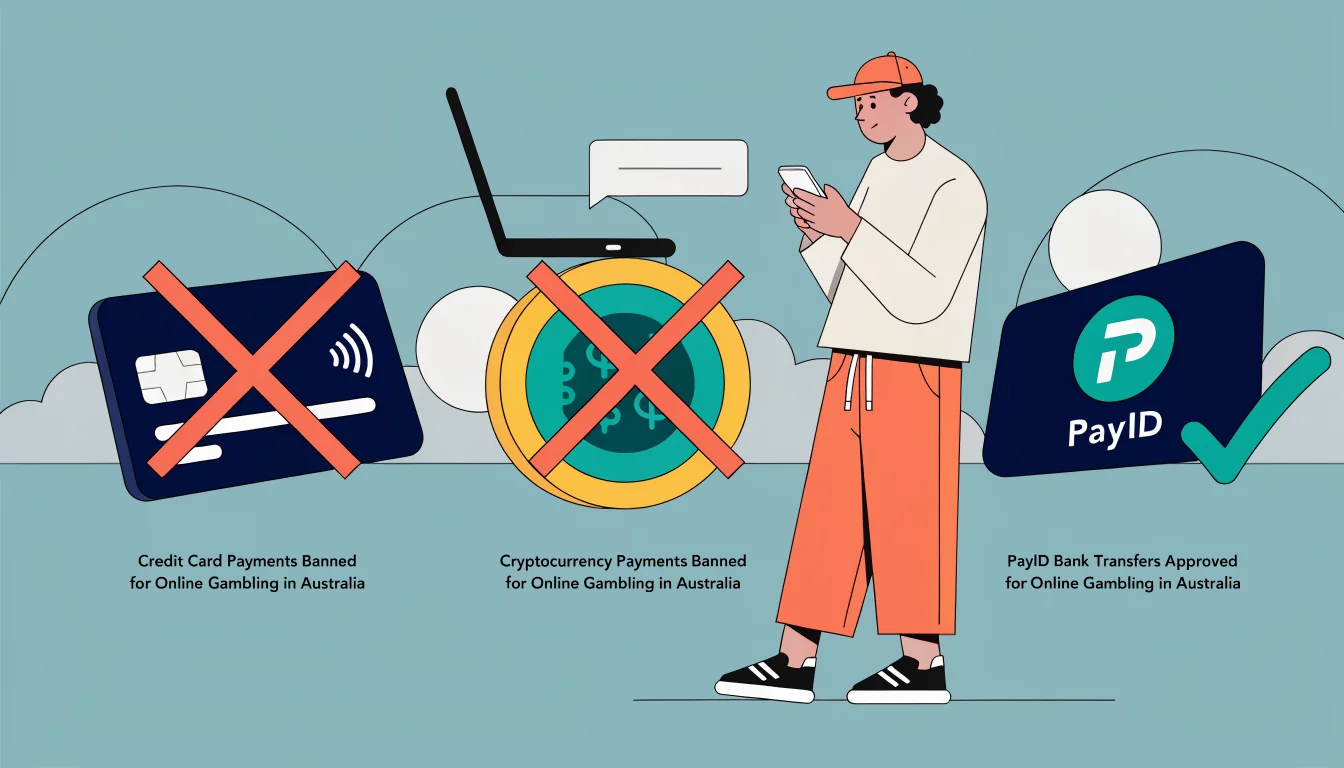
- Credit cards — banned outright for online gambling. Operators that still take them risk fines up to $247,500, which tells you regulators aren’t treating this as a minor rule.
- Cryptocurrency — prohibited for gambling payments since the 2024 amendments to the Interactive Gambling Act. If a site quietly still accepts it, that’s not a “flexible payment option,” that’s a compliance problem you’re funding.
- PayID — bank-to-bank, tied to verified identity, fully inside the regulatory framework regulators are actually watching.
Banned for online casino deposits; operators risk fines up to $247,500.
Prohibited as a payment method since the 2024 amendments; using it breaches the law.
Bank‑to‑bank transfer linked to a verified identity; fully compliant with Australian regulations.
Regulators scrutinise payment processing and player data storage as part of licensing, and PayID sits comfortably inside that scrutiny because it doesn’t try to hide the money’s origin. That’s the whole point of it existing.
What a properly run PayID setup should look like
A licensed casino isn’t just plugging in PayID and calling it a day. There’s a structure around it that’s supposed to protect your money specifically:
- Segregated accounts. Your deposit doesn’t get thrown into the same pool as the casino’s operating cash. Player funds have to be kept in separate accounts from the business’s own money, so if the operator has a bad month, your balance isn’t collateral damage.
- Deposit limits. Licensed operators are required to give you tools to cap how much goes in, and to take breaks when you need to. If a “PayID casino” lets you deposit without ever mentioning a limit option, that’s a gap worth noticing.
- Identity checks that match your bank’s. The name on your PayID should match the name on your casino account. If a site lets you deposit under a different name without blinking, walk away — that’s not a safety feature, that’s a red flag wearing a safety label.
What I actually do before depositing
I don’t take "safe PayID casino" claims at face value anymore, mostly because I used to and it cost me. Now I check three things in this order:
- Does the deposit page show PayID as a direct bank transfer, or does it route through a third-party wallet first? If there’s a middleman skimming a cut or holding funds, that’s not really PayID, that’s PayID-branded friction.
- Is there a visible deposit limit setting anywhere near the cashier, not buried three menus deep in account settings?
- Does the confirmation email or receipt show the transaction going to a named, segregated player account rather than a generic “top-up successful” message with no trail?
None of this takes long once you know what you’re looking for. It’s the same five minutes either way — spent checking, or spent later trying to figure out where your deposit actually went.
Pay & Play Safely: Avoiding Credit Cards and Crypto

I used to keep a card on file at every casino I played at. Felt normal at the time. Then the credit-card ban came in, and I realised half my "convenience" was actually a compliance gap nobody had closed yet.
Here’s the short version: credit cards are out, cryptocurrency is out, and any operator still quietly taking either is telling you something about how they run the rest of the business too.
The crypto ban followed amendments to the Interactive Gambling Act in 2024. Doesn’t matter if it’s Bitcoin, a stablecoin, or some token you’ve never heard of — none of it is a legal way to fund a gambling account anymore. If a site still lists a crypto wallet as a deposit option, that’s not a grey area, that’s a site ignoring federal law.
Credit cards got shut out too, and the penalty side isn’t small — non-compliance can bring fines up to $247,500. That’s not a fee an operator absorbs and shrugs off. It’s the kind of number that tells you a licensed casino has every reason to actually enforce the ban rather than look the other way.
Legal risk of illegal payments
If a casino still offers credit‑card or crypto deposits, you could be exposing yourself to non‑compliant operators and possible regulatory action.
So what’s left? Bank transfers, debit-linked options, PayID — anything that runs through your actual bank account rather than a credit line or an anonymous wallet. The logic is the same one behind the AML/CTF Act 2006: casinos have to be enrolled with AUSTRAC, run KYC checks, keep records, maintain AML programmes, and report anything that looks like suspicious money movement. Credit and crypto make all of that harder to do properly. Bank-linked payments make it traceable, which is the whole point.
What to actually check before you deposit
- No credit card option offered at checkout, full stop
- No crypto wallets listed among funding methods
- Deposit methods tied to a verified bank account, not a prepaid card or anonymous top-up
- ID verification required before your first deposit goes through
If a casino’s payment page still shows a credit card icon or a crypto logo, close the tab. Not because it definitely means the site is a scam — but because it means the site hasn’t kept up with rules that have been in force since 2024, and that’s not a detail I’d want to gamble on.
Playing for Real Money: What Safety Means for Your Funds
Once you’ve settled on a payment method, the next question is where your money actually sits once it lands on the casino’s side. Not a fun question. But it’s the one I ignored for years, right up until a site I’d been playing on for months went quiet mid-withdrawal and I spent a week wondering if my balance existed anywhere outside a database entry.
It does matter where the money sits. Licensed operators are required to keep player funds in accounts separate from the casino’s own operating money. That’s not a nice-to-have, it’s a licensing condition. The idea is simple: if the business hits a rough patch, your deposit isn’t sitting in the same pot as their rent and payroll. It’s segregated. If you’ve ever wondered why "are online casino games safe" keeps coming up as a question people actually type into Google, this is usually the unspoken worry behind it — not the games themselves, but whether the money survives contact with the company.
What licensing actually checks before money touches your account
Getting a licence isn’t a rubber stamp. Regulators want to see industry experience, proof the operator is financially stable, and no outstanding debts hanging over the business. That’s the boring paperwork side of "safety" that nobody puts in a banner ad, but it’s the part that decides whether your withdrawal clears or gets "reviewed" indefinitely.
Licensed operators must keep player funds in accounts separate from their own operating cash.
Regulators also look directly at how payment processing works and how player data gets stored. Not a one-time check either — it’s ongoing scrutiny of the systems handling your card details, your ID documents, your transaction history.
Encryption isn’t marketing fluff, but it isn’t magic either
Licensed sites use bank-level data encryption for personal and transaction information. I used to roll my eyes at that phrase — every site claims "bank-level" something. But the actual point is narrower than it sounds: it means the data moving between your device and their servers is encrypted in transit, the same standard used for online banking. It doesn’t mean the casino is a bank, and it doesn’t mean your funds are insured the way a bank deposit might be. It means the pipe carrying your details is locked. That’s it. Worth having. Not worth confusing with a guarantee.
Why they ask for your ID (and why that’s the safe sign, not the shady one)
Identity verification is where most people get annoyed. You deposit, you want to play, and instead you’re uploading a photo of your licence and a selfie. It feels like friction. First time it happened to me I assumed I’d stumbled onto something dodgy — turns out it’s the opposite.
Submitting personal details and document photos is a standard part of playing for real money at a properly licensed site. It confirms you’re who you say you are, confirms your age, and ties your account to a real identity rather than a burner email. Sites that skip this step entirely, letting you deposit and withdraw real money with zero verification, are the ones to be wary of — not the ones asking for your ID.
The short version
- Your deposit should sit in a segregated account, separate from house funds.
- The operator should have passed financial and background checks before ever getting licensed.
- Data in transit should be encrypted to a banking standard.
- You should be asked to verify who you are before serious withdrawals happen.
None of this is exciting. It’s also the entire difference between a safe real-money casino and one that just looks like one.
Finding the Best Safe Online Casino: What to Look For
Here’s the thing about picking a casino: "best" gets thrown around so much it’s basically meaningless. Every operator claims it. What actually separates a genuinely safe site from a slick landing page is a short list of things you can verify, not vibes you have to trust.
Key safety criteria
- Licence number and regulator name are clearly visible.
- Payment methods are limited to PayID or Australian bank transfers.
- Responsible‑gambling tools (self‑exclusion, deposit limits) are easy to find.
- Player funds are held in segregated accounts.
- The site uses bank‑level encryption and proper identity verification.
I stopped asking "is this casino safe" and started asking "what can I check right now" — different question, better answer.
Responsible gambling tools, not just a mention of them
Every licensed site is required to offer responsible gambling tools — self-exclusion programs and clear rules on how the games work, what you’re agreeing to, what happens if you want out. The test isn’t whether these exist somewhere in the terms and conditions. It’s whether you can find them in three clicks from your account settings. If self-exclusion is buried in a PDF nobody reads, that’s a site treating compliance as a checkbox, not a safeguard.
Deposit limits and break options you can actually set
Licensed casinos give you tools like deposit limits and break options, and these should be something you control, not something support "can look into." I’ve had operators sitting on properly issued licences let me set a weekly deposit cap in under a minute, no phone call, no "are you sure" guilt trip. That’s what it’s supposed to look like. If a site makes it awkward to limit your own spending, ask yourself why a business would make that hard.
The encryption you can’t see but should assume is there
You’re not going to inspect a casino’s back-end security yourself, and you shouldn’t need to. Licensed sites are required to run bank-level data encryption on personal and transaction information, which is the same baseline your actual bank uses. The padlock icon in your browser bar is table stakes, not proof of much. What matters is that the licence itself carries this requirement — which loops back to why checking who issued that licence matters more than any badge on the homepage.
Monitoring that runs when you’re not looking
Licensed Australian casinos monitor suspicious activity around the clock. This isn’t there to catch you — it’s there to catch account takeovers, unusual betting patterns, and the kind of fraud that hits players who never see it coming. You won’t notice this layer working unless something goes wrong, which is sort of the point. Ask, if you want, whether the operator can explain how flagged activity gets reviewed. A real answer beats a shrug.
Where your money actually sits
This one’s easy to skip past but it shouldn’t be: player funds have to be kept in separate accounts from the casino’s own operating money. Segregated accounts mean that if the operator hits financial trouble, your balance isn’t just another line item they can dip into to cover the shortfall. It’s a boring-sounding requirement that matters enormously the one time it’s tested.
A short list worth running before you deposit
- Can you locate self-exclusion and rules without digging?
- Can you set a deposit limit or take a break yourself?
- Does the licence held actually require encryption and fund segregation?
- Is there any indication the operator monitors accounts, or is fraud response only mentioned after the fact?
None of this takes long to check. It’s slower than clicking "sign up" on the first flashy banner, sure — but that extra five minutes is the whole difference between picking blind and picking safe.
Mobile Gambling on the Go: Keeping Your Experience Secure
I used to think mobile play was riskier than desktop. Smaller screen, one thumb, half-reading the terms while the tram lurches. Turns out the risk isn’t the device. It’s whether you’re too distracted to notice the checks aren’t there at all.
Avoid unofficial apps
Using a third‑party APK or unverified mobile app can bypass security checks and put your data at risk.
A safe mobile casino login should feel almost identical to logging in on a laptop. Same encryption, same identity checks, same scrutiny behind the scenes — just squeezed into a smaller interface. If a site strips any of that out to make the app feel "lighter," that’s not convenience. That’s a corner being cut.
What should actually happen on your phone:
- Your personal and transaction details travel through bank-level data encryption, the same standard used on desktop. No app should be sending your card or bank details in the clear just because it’s “mobile-optimised.”
- Identity verification still applies. You submit personal details and photos of your documents, and no mobile shortcut skips this — if an app lets you deposit real money before verifying who you are, that’s a red flag, not a feature.
- Payment processing gets the same regulatory scrutiny on mobile as anywhere else. The processor doesn’t care what screen you’re tapping on; the oversight follows the transaction, not the device.
I once had an app ask for a selfie next to my ID mid-session, right after I’d deposited. Annoyed me at the time — I was mid-hand. But that’s the identity check doing its job, not the casino being difficult.
The practical bit: use the casino’s own app or its mobile site, not some "faster" APK link someone dropped in a forum. Keep your phone’s OS updated, because encryption on the casino’s end means nothing if your device is the weak link. And never save your password in a browser on a shared or public phone — obvious advice, sure, but I’ve watched a mate log into his account on a mate’s laptop and just walk away.
Mobile doesn’t lower the bar. It just makes it easier to stop noticing where the bar is.
Quick Checklist: Is an Aussie Casino Truly Safe?
I keep coming back to lists like this when I’m bouncing between tabs at 11pm trying to decide if a site is worth my card details. Here’s what I actually check now, in the order I check it.
- Licence number visible, not buried. If you have to dig through a footer or an “about us” page to find it, that’s already a bad sign.
- Licence dates that make sense. Some run indefinitely, others have a hard expiry — I’ve seen anything from a couple of years out to decades away. Either is fine. What’s not fine is no date and no number at all.
- The operator can show its homework. Getting licensed isn’t just paperwork — companies have to prove they’ve got real industry experience, solid finances and no outstanding debts hanging over them. That’s not something a fly‑by‑night site fakes convincingly.
- PayID or a real Aussie bank option, not just crypto or some workaround for a card payment.
- Responsible gambling tools are actually clickable, not just mentioned in a paragraph somewhere.
- Support that answers like a person, not a script that loops.
- T&Cs written in plain English, no wagering terms hidden in a PDF you need three clicks to find.
If a site fails two or more of these, I close the tab. Doesn’t matter how good the welcome offer looks — I’ve learned that the offer is never the problem, it’s everything underneath it you didn’t check first.
None of this takes long once you’ve done it a few times. Ten minutes, tops.
Safe Games: Fairness and Audits in Australian Online Casinos
Here’s the thing nobody tells you when you’re chasing a "safe online casino with generous welcome bonuses": the bonus means nothing if the games underneath aren’t checked. I used to skip straight to the promo tab. Big mistake.
A licence isn’t just a badge on the footer. It comes with an obligation — the casino has to keep games fair, secure, and aligned with player protection and responsible gambling rules. That’s not marketing copy, it’s a licensing condition.
What actually backs that up is the audit process. Licensed casinos don’t get a one-time stamp of approval and move on. Their games and software go through regular independent audits, checking that outcomes aren’t rigged and the numbers behave the way they’re supposed to.
So when you’re wondering whether online casino games are genuinely safe, the honest answer is: it depends entirely on whether someone outside the casino is checking the casino. No audit trail, no real answer.
Same logic applies if you’re testing free safe online casino games before spending anything. If the free-play version sits on the same licensed platform, it’s covered by the same fairness checks as the real-money tables. If it’s on some unlicensed site with no audit history — you’re just guessing.
Prepared by the Outback Luck editorial staff.