
Best Pokies in South Australia SA: What Actually Applies
 Available in US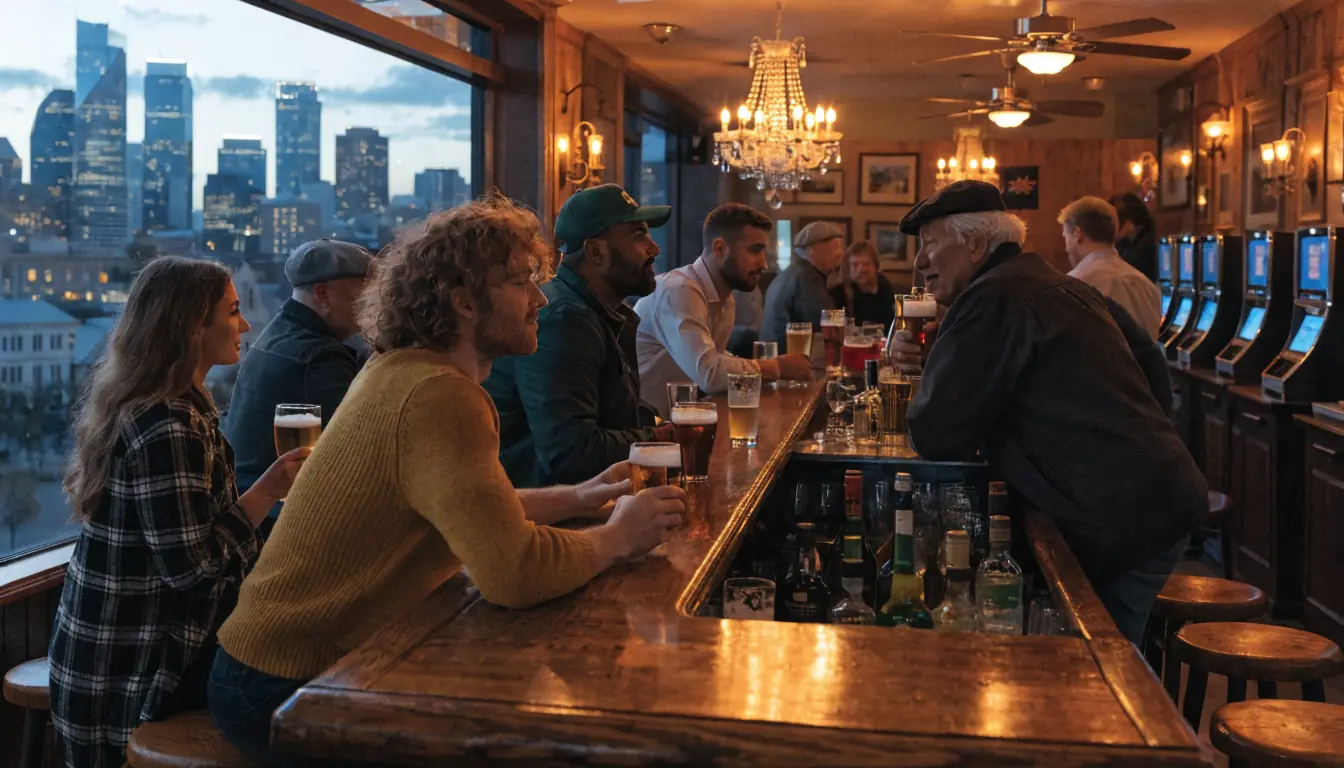
Choosing where to play pokies online can feel overwhelming, so before you dive in, it helps to see how a handful of well-known operators stack up as a starting point for your own research.
Thor Casino is a recognisable name in the online casino space, offering players a pokies-focused environment worth considering as part of your search.
Betvictor is an established betting and gaming brand that has built a presence across multiple markets, making it a familiar option for players exploring pokies.
Tabcorp is a well-known name in the Australian gambling industry, with a long-standing reputation in wagering and gaming services.
Vegaz Casino positions itself as an online casino destination with a pokies offering aimed at players looking for variety.
Jeetcity Casino is an online casino brand that includes pokies among its offerings for players seeking a broader gaming selection.
JustCasino presents itself as a straightforward online casino option for players interested in pokies and other casino games.
WinSpirit Casino is an online gaming platform offering pokies as part of its broader casino catalogue.
Betfair is a widely recognised betting brand with a long history in the wagering industry, extending into gaming offerings.
CasinoStars is an online casino brand that features pokies among its games for players browsing their options.
Lucky Dreams is an online casino known for its pokies selection, catering to players looking for a dedicated gaming experience.
What you need to know about pokies in South Australia
I’ve lost more coins to gaming machines than I’d like to admit, and most of that damage was done in Adelaide pubs where the lighting is bad on purpose and the clock is nowhere in sight. Before I get into what’s actually different about South Australia, you need to understand something that trips up a lot of people who come to gambling fresh: there’s no single set of rules for the whole country. Australia doesn’t have one overarching gambling statute or one authority that governs everything. Regulation is split between the states and territories on one side and the federal government on the other, and each state has gone its own way on gaming machines specifically. That means what’s normal in Adelaide can be flatly illegal or wildly different two states over, and nobody’s going to tell you that at the pub door.
I found this out the hard way after moving. I assumed a machine was a machine, that the rules I’d learned somewhere else would just carry over. They didn’t. The venues looked similar, the lights and sounds were the same manufacturer-grade dopamine hits, but the fine print — opening hours, where machines can even be installed, what counts as a "casino" versus a "club" — was different enough to matter.
Where you’ll actually find the machines
In South Australia, like in several other states, gaming machines aren’t locked away in one glittering casino floor. They’re spread across casinos, pubs and clubs. That’s the pattern in some Australian states — not all, but a meaningful chunk of them — and South Australia sits in that category. Walk into your local pub on a Tuesday afternoon and there’s a decent chance a bank of machines is sitting near the back, past the bistro, under a sign that says something cheerful about jackpots. Clubs — the sporting clubs, the RSLs, the social clubs — run them too. And then there’s the casino itself, which is its own animal with its own floor and its own crowd.
This spread-out model matters more than people think. It means gaming machines in South Australia aren’t a special destination you plan a trip around. They’re just there, woven into the pub and club circuit, which is part of why they’re so easy to fall into without really deciding to. You go for a counter meal, you wait for your table, and somehow you’ve fed a fifty into a machine because it was sitting right there glowing at you. I’ve done that more times than I want to count. It’s not dramatic. It’s just convenient, and convenient is exactly the problem.
Contrast that with a place like Western Australia, where the machines are locked to a single casino floor and you have to make a deliberate trip. South Australia doesn’t work that way. The accessibility is the whole character of the scene here — venues on almost every main strip, in almost every suburb, each with their own bank of machines tucked somewhere past the bar.
Why every state does it differently
The reason South Australia’s rules don’t match, say, Queensland’s or Victoria’s comes down to history and to how the country structured gambling law from the start. Gaming machines in Australia are regulated by state governments, and that single fact explains almost everything confusing about trying to compare venues across state lines. There was no national rollout, no single body that said "here’s how poker machines will work in this country." Each state legislature decided for itself, at different times, under different political pressures, and the result is a patchwork that’s stayed a patchwork ever since.
New South Wales got there first. It was the first Australian state to legalise poker machines, back in 1956. Once that door opened in NSW, the rest of the country didn’t just copy the model — each state adapted it, restricted it, or expanded it according to its own priorities. Some states leaned into pubs and clubs as the natural home for machines. Others kept things tighter, restricting machines to casino floors only. South Australia landed somewhere in the pubs-and-clubs camp, which is why the scene here feels more like NSW’s spread-out approach than the more contained models you’d find elsewhere.
What that means practically: if you’re used to a state where machines only exist inside one big casino, South Australia is going to feel almost aggressively casual by comparison. If you’re coming from NSW, it’ll feel familiar — same basic shape, pub culture soaked into the gambling culture, though the actual scale is nowhere near what NSW runs. NSW alone has 87,298 machines spread across 2,195 venues, which gives you a sense of just how enormous that state’s footprint is compared to the rest of the country. South Australia isn’t running numbers anywhere near that, but the pattern — machines distributed through pubs and clubs rather than confined to a casino — is the same instinct.
The regulator behind the curtain
Every state has its own regulatory body that sits behind the pokies scene, setting the rules venues have to follow, licensing who can operate machines, and (at least in theory) keeping an eye on things. South Australia is no exception — there’s a state-based regulatory structure doing that work here, separate from whatever’s happening in Queensland or Victoria or anywhere else. This is the direct consequence of that earlier point about there being no single national authority. You’re not dealing with one Australia-wide gambling commission when you walk into a venue. You’re dealing with South Australia’s own rules, enforced by South Australia’s own regulator, and that regulator has no jurisdiction the moment you cross into another state.
I mention this because it actually matters if you ever have a complaint about a venue, or you’re trying to figure out who’s responsible for what. The pub down the road answers to South Australian regulation, not some vague federal gambling law. If something feels off about how a machine’s behaving, or you want to know the actual rules a venue is supposed to be following, you’re looking at state-level rules, not a national rulebook.
Hours: the thing nobody tells you until you’re standing at a dark door
Here’s where I’ll be honest about my own stupidity. I used to assume gaming venues just ran all night, everywhere, always — because a couple of places I’d been to did exactly that, and I extrapolated from a sample size of two. That’s a bad way to plan a night out, and it’s an even worse way to plan a night out if you’re trying to be responsible about how much time you’re spending in front of a machine.
Variable Hours
Venue hours for pokies differ by licence type and location, so you can’t assume machines are open 24 hours.
The truth is venue hours in South Australia vary — by venue, by licence type, by location. Some pubs and clubs run gaming machines pretty much round the clock or close to it. Others shut the gaming room well before the bar closes, or don’t open it until a certain time in the afternoon. There isn’t a single blanket hour that applies to every venue across the state, and treating "gaming machines are open 24 hours" as a universal assumption is how you end up standing outside a locked door at 3am wondering why the lights are off.
If you’re chasing a venue that runs late or around the clock, the only reliable move is checking with the specific venue — not assuming based on what a mate told you about a place he went to once. Licensing conditions differ, local council rules can layer on top of state rules, and a club’s hours might be tied to membership requirements that a pub down the street doesn’t have. I’ve shown up to what I thought was a sure thing at midnight and found the gaming room dark while the bar was still going. Lesson learned: check first, don’t assume.
Pubs versus clubs versus the casino — they’re not the same experience
It’s worth separating these out because people lump them together and they’re genuinely different environments, even though the machines themselves might look and sound identical.
Casual entry, no membership required, machines are tucked in the back area and operate alongside food and drinks.
Often require cheap or automatic membership, machines are part of a community setting with regulars.
Dedicated gaming floors where machines are the main attraction and the environment is more intense.
Pubs are the most casual entry point. You don’t need to be a member of anything. You walk in, you can eat, drink, and there’s a decent chance a gaming area is tucked somewhere in the building. The atmosphere is unstructured — nobody’s tracking who you are beyond what any bar would normally do, and the machines are just part of the furniture.
Clubs operate differently. Many require membership, even if that membership is cheap or practically automatic once you sign a form at the door. Sporting clubs, RSLs, community and social clubs — this is the category that in some cases has historically offered a slightly different feel, often tied to a sense of community that a pub doesn’t try to project. The machines are the same basic technology, but the surrounding culture leans more toward "regulars" and less toward passing foot traffic.
Casinos are their own thing entirely — a dedicated gaming floor, built for exactly this purpose, with none of the "oh there happens to be a bistro and also some machines" feel you get at a pub. If you’ve ever wondered why a casino floor feels more intense than a pub’s gaming corner, it’s because it is more intense. It’s designed as the main event, not an afterthought bolted onto a counter meal venue.
None of these categories is inherently "better" — I’ve had perfectly fine, low-key nights at pub machines and I’ve also had nights at a casino floor that felt like standing inside a slot machine’s own nervous system. What matters is knowing which environment you’re walking into and adjusting your expectations — and your wallet — accordingly.
The 2020 shutdown — the one time the whole country agreed
If you want proof that gaming machines are woven this deeply into everyday Australian life, look at what happened in 2020. During the COVID-19 pandemic, every Australian venue with poker machines was shut down. Not "reduced hours," not "some venues closed" — all of them, everywhere, machines silent from coast to coast. Usage dropped to zero because the machines simply weren’t operating anywhere in the country.
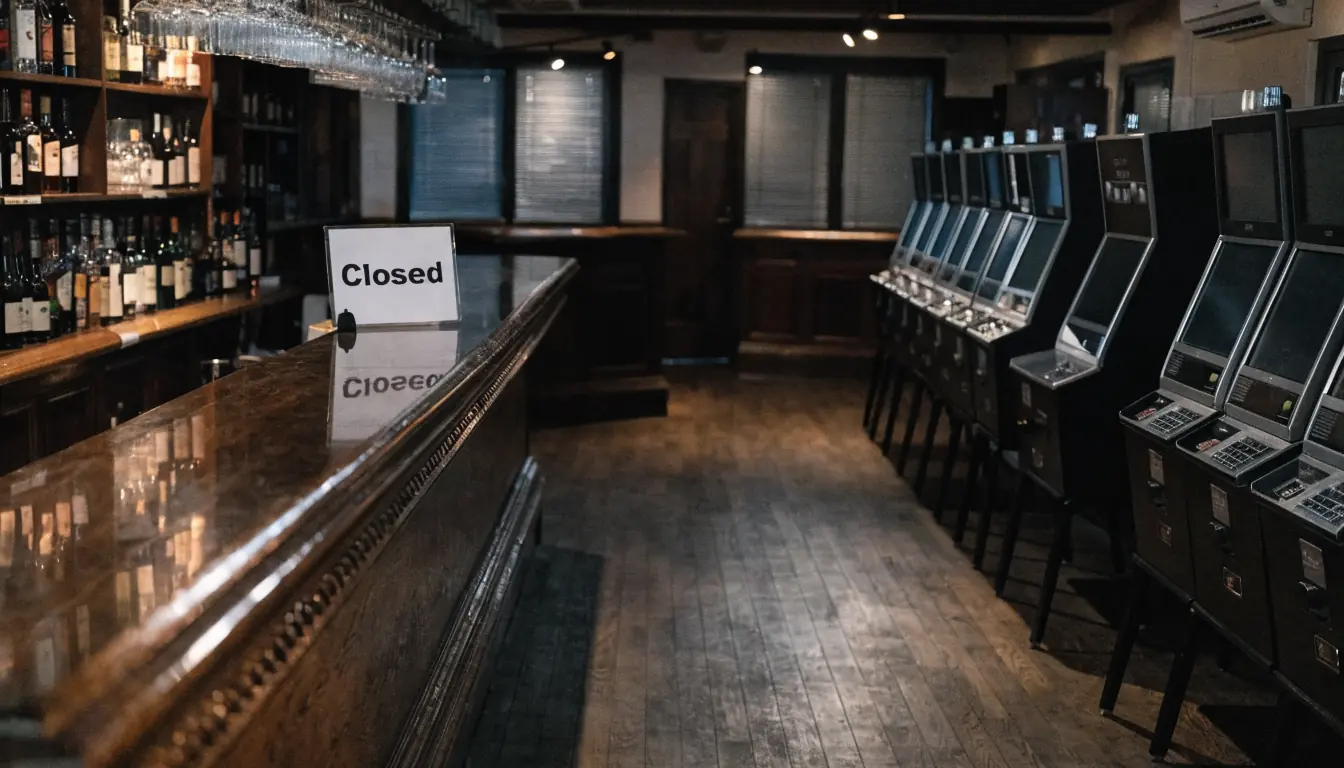
That’s a strange kind of unity for an industry that’s otherwise so fragmented state by state. Queensland’s rules didn’t matter, Victoria’s didn’t matter, South Australia’s didn’t matter — for that stretch, the machines were off, full stop, in every state regardless of how differently each one normally regulates them. It’s one of the only moments in the modern history of the industry where the usual patchwork disappeared entirely and the country moved as one.
I remember what that did to the pub down the road from where I was living at the time. The bistro stayed open, people still came in for a beer, but that back room where the machines usually hummed away was just… quiet. Dark. It was the first time in years I’d walked into a pub and not heard that particular soundtrack — the little chimes, the reel sounds, the occasional shout when someone hit something decent. It made me realise how much background noise those machines actually are in a normal week, and how much money quietly moves through that background noise without anyone really registering it as significant until it stops.
When venues reopened, each state handled the return on its own timeline and its own conditions — again, that same fragmented pattern reasserting itself the moment the crisis passed. South Australia’s venues came back under South Australia’s rules; other states did their own thing. The brief moment of nationwide uniformity was exactly that — brief, and driven by an emergency rather than any coordinated gambling policy.
What actually makes South Australian venues distinct
Pulling this together, a few things stand out about the South Australian scene specifically, especially if you’re used to a different state’s setup or you’re trying to figure out where to spend your time and money here.
The distribution model. Machines aren’t cordoned off to a single casino. They’re in pubs, they’re in clubs, they’re part of the general fabric of going out rather than a specific destination you travel to. This is closer to the NSW approach — machines embedded in everyday venues — than to states that restrict machines to one casino floor.
State-specific regulation with no national override. Every rule that governs a South Australian venue is a South Australian rule, made by South Australian regulators, and it doesn’t automatically match what’s legal, required, or restricted in Queensland, Victoria, Western Australia or anywhere else. If you’ve gambled in another state and you’re assuming the rules transfer, don’t. They don’t.
Variable hours across venues. There’s no single, state-wide answer to "when are gaming machines open." Some venues run long hours, others don’t, and the only way to know for a specific pub or club is to check that specific venue rather than relying on general assumptions.
A pub-and-club culture rather than a casino-first culture. The casino exists and it’s its own experience, but the bulk of everyday gaming machine activity in South Australia happens in venues that are primarily pubs or clubs first, with gaming machines as one part of what they offer — not the other way around.
None of this makes South Australia unique in some flashy way. It’s more that the state sits at a particular point in a national pattern that’s been fragmented since gaming machines were first legalised in this country, and understanding that fragmentation is the actual key to understanding why your experience here might not match what you’ve heard from someone in another state, or what you’ve read in a general guide that doesn’t distinguish between them.
A quick comparison of how states differ in structure
To make the contrast concrete, here’s a rough sketch of where machines are located across a few states — not the specific numbers for each (those get covered elsewhere), just the structural difference that actually shapes your experience walking in the door.
| State | Where machines are located | General model |
|---|---|---|
| South Australia | Casino, pubs, clubs | Distributed across everyday venues |
| New South Wales | Casino, pubs, clubs | Distributed, and the largest network in the country by venue and machine count |
| Western Australia | Single casino only | Centralised, no pub or club machines |
The point of laying it out this way isn’t to rank the states — it’s to show that "pokies" doesn’t mean the same physical experience everywhere in Australia. In a state that centralises machines to one casino, your entire experience is shaped by that one venue’s layout, hours and atmosphere. In a distributed state like South Australia, your experience is shaped by whichever pub or club happens to be nearest, which is a much more scattered, unpredictable, everyday kind of gambling exposure. It’s less of an event and more of a habit waiting to form, and I say that as someone who formed exactly that habit without noticing until it was already there.
Why the fragmented system actually matters to you
It’s easy to read "no single national gambling authority" as a dry regulatory detail and skip past it, but it has real consequences for anyone actually walking into venues.
First, it means the rules you learn in one place don’t travel. If a friend from Queensland tells you something about how machines work or what protections are in place, that’s Queensland’s rulebook, not South Australia’s. Assuming otherwise is how people end up confused about what they’re actually entitled to, or what a venue is actually required to do.
State Rules
Assuming gambling rules from another state can lead to misunderstandings and potential breaches; always check South Australian regulations.
Second, it means enforcement and oversight are as fragmented as the rules themselves. There’s no single office you’d contact for an issue that happened in a South Australian pub if that office is actually a national one — the relevant authority is going to be state-based, tied to South Australia specifically. Knowing that saves you from chasing the wrong door if you ever need to raise a concern about how a venue is being run.
Third — and this is the one that actually changed how I gamble, if I’m honest — it means you can’t rely on some general sense of "how Australia does gambling" to protect you or guide you. Each state built its own version of this, at different times, for different reasons, and South Australia’s version is the one that’s actually going to shape every night you spend in front of a machine here. Generic assumptions get expensive. I know because mine did.
The historical thread running through all of this
It helps to remember that this whole fragmented structure isn’t an accident or a recent development — it traces back to 1956, when New South Wales became the first state to legalise poker machines. Everything that followed in every other state, including South Australia, happened in the shadow of that first move. Each state watched what NSW did, decided how much of it to adopt, and built its own regulatory scaffolding around gaming machines from there. Some states leaned into the pub-and-club model NSW pioneered. Others deliberately built something more restrictive.
That’s genuinely useful context, not trivia, because it explains why the country ended up this way instead of with one unified approach. Gambling regulation in Australia didn’t start as a coordinated federal project — it started as one state’s decision that other states then reacted to, each in their own direction, and nearly seventy years later we’re still living inside that original divergence. South Australia’s pubs-and-clubs model, its own regulator, its own hours, its own rules — all of it sits downstream of that first legalisation in 1956 and the decades of state-by-state divergence that followed.
Knowing that doesn’t change how a machine plays. It does change how much you should trust any blanket statement about "how pokies work in Australia" — because there isn’t one answer, there are eight or nine, and the one that actually applies to you depends entirely on which side of a state border you’re standing on when you walk through the door.
Online casino pokies: the legal landscape for South Australian players
Here’s the bit that trips people up: none of this is legal, and yet everyone you know has done it anyway.
The Interactive Gambling Act 2001 is the federal law that actually matters here, more than anything South Australia’s own regulators do. It makes it an offence to provide online casino games, slot machines or poker to anyone living in Australia. Read that again. Providing, not playing. The law is aimed squarely at the operator, not at you sitting on your couch with your phone.
Australian law criminalises providing online pokies to residents, but playing on offshore sites is not illegal for you.
That distinction changes everything about how this plays out in real life.
Who actually gets punished
If a company sets up an online casino and offers it to South Australian residents, it’s breaking the law. Penalties run up to AU$360,000 per day for an individual operator and AU$1.8 million per day for a corporation. Per day. Not a one-off fine — every single day the service stays up.
You, the player? Nothing. Australian residents who deposit money at offshore casinos face no criminal exposure. I want to be clear about that because I spent longer than I’d like to admit assuming I was somehow the one breaking the law. I wasn’t. The operator was. Still is, every time one of these sites stays online and takes deposits from Adelaide.
What’s actually banned
The Act doesn’t just cover casino-style pokies. It prohibits online casino games, slot machines and poker services outright for anyone in Australia. It also bans in-play betting on live sports events offered online — except racing, which sits in its own category. So if you’re picturing one tidy rulebook that covers "gambling," it’s not that. Sports betting apps can legally take your money on a horse race mid-event. The same app offering you a live bet on a football match while it’s being played is doing something the Act specifically forbids.
Pokies fall on the "banned" side regardless. There’s no legal, locally licensed online casino offering slot-style games to South Australian players. That gap is exactly where offshore operators live.
Where offshore sites actually fit
Because no domestic operator can legally offer online pokies, every online pokies site an Australian plays on is, by definition, operating outside the Act’s reach — usually licensed somewhere else entirely, outside Australian jurisdiction. They’re not sanctioned. They’re not endorsed. They exist in the space the law leaves open by only punishing the provider, and only if that provider can actually be reached by Australian enforcement.
That’s the whole trick, and it’s not a secret one. The operators know it. You’ll notice most of these sites don’t bother hiding — they just don’t call themselves "Australian licensed," because they can’t.
What this means if something goes wrong
No local regulator stands behind an offshore pokies site the way state gaming authorities stand behind a licensed venue floor. There’s no South Australian body you can complain to if a payout gets delayed or an account gets frozen. You’re relying entirely on whatever jurisdiction actually licensed the operator, and on that operator’s own reputation.
Payout Uncertainty
South Australia does not publish a minimum payout percentage, so players must rely on venue compliance rather than a public figure.
None of this touches what happens in a licensed venue with actual gaming machines on the floor — that’s a separate world, with separate rules, covered elsewhere. This is specifically about what happens when the machine is on your screen instead of in a room. Different law, different risk, same warning: know which side of the screen decides who’s actually accountable.
South Australia pokies payout percentages compared to other states
Nobody hands you a payout sheet when you sit down at a machine, so most players never think about the minimum return rate — the share of money a gaming machine is required to give back over time. It’s set by the regulator, not the venue, which matters more than it sounds.
Queensland sets the floor at 85% for pubs and clubs, and 90% for casinos. Victoria runs the same 85% minimum across the board, with the added catch that machines there won’t take a bill over $50 — a rule aimed at slowing down how fast you can keep feeding cash in.
South Australia doesn’t publish anything comparable that I could line up against those two, which is its own kind of answer. No public minimum to point at means you’re trusting the venue and the machine’s default settings, not a number you can check before you play. Worth remembering next time someone tells you "the payouts are the payouts everywhere."
What does the Interactive Gambling Act actually prohibit?
It makes it an offence for an operator to provide online casino games, slot machines and poker to Australian residents, plus in-play betting on live sports events other than racing offered online. Breaching it carries penalties up to AU$360,000 per day for individuals and AU$1.8 million per day for corporations.
What state laws also apply?
Each state sets its own rules for gaming machines: Queensland requires a minimum 85% return rate in pubs/clubs (90% in casinos), Victoria mandates 85% minimum returns and bans notes over $50, and Western Australia restricts machines entirely to the Crown Perth casino floor at a 90% return rate.
What is ACMA?
ACMA is the Australian Communications and Media Authority, which can order internet service providers to block illegal offshore gambling websites and has blocked more than 1,564 such sites since November 2019. It can also notify border protection agencies about the directors or principals behind illegal operators.
Is gambling regulated in Australia?
Yes, but there’s no single national law or regulator — gaming machines are regulated separately by each state government, while online gambling falls under the federal Interactive Gambling Act. South Australia has its own regulatory body overseeing venues, which has no authority beyond its own borders.
Created by the ”Outback Luck” editorial team.