
Best Casinos for Online Craps in Australia
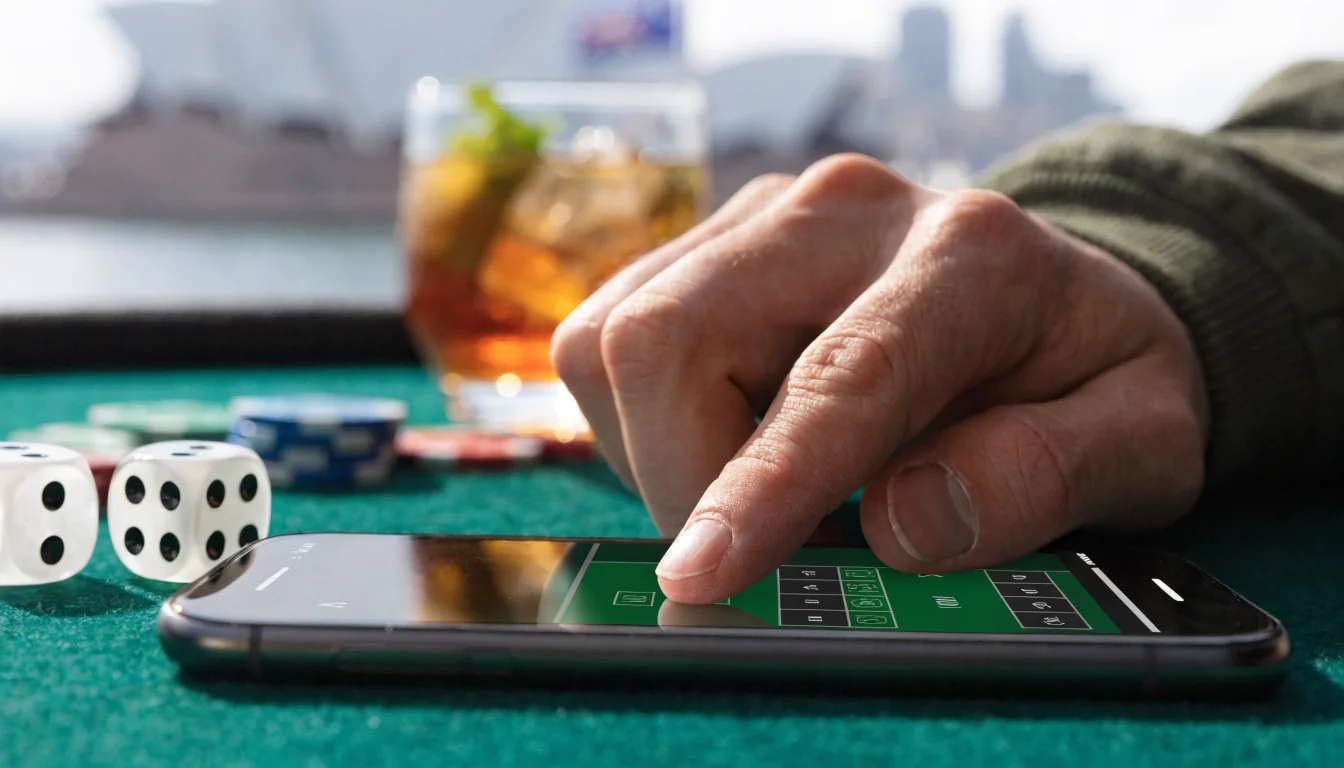
If you’re keen on trying your luck at online craps, it helps to know which casinos offer a reliable overall experience before you sign up. Here’s a quick look at the operators worth considering.
Thor Casino is an online gaming destination that caters to players looking for a themed casino experience.
Betvictor is a well-established name in the betting and gaming space, offering a broad range of options for players.
Tabcorp is a recognised operator with a long-standing presence in the Australian wagering and gaming industry.
Vegaz Casino presents itself as a modern online casino aimed at players seeking a varied gaming selection.
Jeetcity Casino offers an online casino platform designed to appeal to a wide range of players.
JustCasino is an online casino option that provides a straightforward gaming environment for its users.
WinSpirit Casino is an online casino aiming to give players an engaging overall experience.
Betfair is a globally known betting and gaming brand with a solid reputation in the industry.
CasinoStars is an online casino that positions itself as a destination for casino game enthusiasts.
Lucky Dreams is an online casino that offers players a themed and accessible gaming experience.
Understanding Online Craps in Australia: Legalities, Licensing and Payment Options
I’ll be honest: the first time I went looking for a craps table online, I expected the legal side to be a five-minute skim. It wasn’t. I ended up three tabs deep into government PDFs, trying to figure out whether I was about to do something actually illegal or just something my bank might frown at. Turns out it’s the second one, but the confusion is understandable, and it’s worth clearing up properly before we even get near dice mechanics or betting layouts — that’s for later.
The law that actually matters: the Interactive Gambling Act
Australia doesn’t have a patchwork of casino laws you need to memorise state by state when it comes to online play. There’s one piece of legislation doing the heavy lifting here: the Interactive Gambling Act. This is the framework that governs online casino activity in the country, and it’s the reason the whole industry looks the way it does — lots of overseas operators, very few (if any) local ones offering real-money online casino games.
Here’s the part that trips people up. The Act makes it illegal for casino operators — domestic or offshore — to provide interactive gambling services to people in Australia. Read that again: it’s the operator’s obligation, not yours. The law is written to target who can offer these services into Australia, not to punish someone sitting on their couch playing craps on their phone. I’m not a lawyer and I’m not going to pretend this is legal advice, but the structure of the Act is pretty clear on where the liability sits.
Legal Grey Zone
You can play craps online in Australia, but the operator, not you, bears the legal risk, meaning there is little consumer protection if the casino fails to pay out.
That said — "not illegal for the player" doesn’t mean "endorsed" or "fully protected." It means you’re operating in a grey zone where the licensing pressure falls on the casino, not on you personally. Which explains the next thing you’ll notice the moment you start looking for somewhere to play.
Why every real-money site you find is based overseas
Australian regulators generally don’t license real-money online casino sites for local players. There isn’t a local, government-approved online casino you can just sign up to the way you might for a state lottery. If you want real-money craps, you’re playing on a platform licensed somewhere else — and that’s normal, not a red flag by itself. It’s just how the market is structured here.
What matters is where "somewhere else" is, and whether that jurisdiction actually holds operators to account. Licensed online casinos serving Australian players typically carry licences from places like Curaçao, the MGA (Malta), the UKGC, or Panama. These aren’t identical in strictness — a UKGC licence generally means tighter oversight than some others — but any of them beats a casino with no licence at all. A legitimate online casino, wherever it’s based, is licensed and regulated by a government body, and that licence is the first thing I check before I even look at the game library.
I learned this the annoying way. Years back I signed up somewhere because the front page looked slick, deposited, and only afterwards went hunting for a licence number. Found nothing. Withdrawal took forever and support went quiet. Not a huge loss, but a stupid one — the kind of thing a two-minute check at the start would have avoided.
What a real licence actually tells you
A licence number on its own doesn’t guarantee a perfect experience, but it tells you a regulator somewhere has looked at how the casino handles player funds, game fairness, and disputes. The sites worth playing craps on are the ones where:
- The licensing body and number are stated, not just implied.
- The games are supplied by recognised providers — the casinos worth recommending here run on either Microgaming or Playtech, which are established names in the industry rather than unknown white-label software.
- Payouts happen the way the casino says they will. This sounds obvious, but it’s the detail that separates a site worth your time from one that isn’t. The operators worth mentioning on this front have a track record of paying out as promised, which is exactly why independent reviewers tend to be satisfied with them rather than lukewarm.
Commonly used license for Australian‑facing casinos, provides basic regulatory oversight.
Offers tighter oversight and is considered more reputable than some other jurisdictions.
Known for strict regulation and higher player protection standards.
Another jurisdiction whose licences are accepted by many operators targeting Australian players.
None of that shows up on the homepage banner. You have to dig a little, usually in the footer or a "licensing" page that nobody clicks on. Worth clicking on.
The age question, and why it’s not just a checkbox

The minimum gambling age across most Australian jurisdictions is 18, though a handful of states set it at 21. This isn’t a formality you tick and forget — legitimate operators build age verification into account creation, and you’ll be asked to confirm your details at some point, sometimes before you can withdraw. If a site lets you deposit and play without any identity check at all, that’s not a convenience, it’s a warning sign about how seriously they take compliance generally.
Getting your money in — and more importantly, out
This is where the legal talk turns practical, and it’s the part I actually care about day to day. Every casino worth recommending for Australian players deals in Australian dollars. That matters more than it sounds — if you’re depositing in AUD and the site is quietly converting to USD or EUR behind the scenes, you’re losing money to exchange rates and probably conversion fees you never signed up for. Stick to platforms that let you deposit and withdraw directly in AUD, no detour through another currency.
On methods, Australian online casinos typically support:
- Visa
- MasterCard
- Cryptocurrency
- PayID
- Neosurf
Each of these has a different personality. Cards are familiar and easy, but they’re also the payment type most likely to get flagged or declined — some banks and payment providers block gambling-related transactions outright, regardless of whether the casino itself is legitimate. This isn’t the casino’s fault and it isn’t yours; it’s a policy some banks apply broadly to anything that codes as gambling. If your card gets rejected at the deposit screen, it’s worth trying a different method before assuming the casino is broken.
PayID is worth knowing about specifically if you’re playing from Australia — it’s a local payment identifier system, and casinos that support it are signalling that they’ve built for the Australian market rather than just tolerating Australian sign-ups. I’d treat a site offering PayID as a small positive signal, not a dealbreaker if it’s absent, but a nice sign of local awareness.
Cryptocurrency and e-wallets are the ones to reach for when speed is what you care about — they offer the quickest payouts available to Australian players, generally outpacing card withdrawals by a wide margin. If you’ve ever waited on a withdrawal and refreshed your banking app every hour like it was going to change something, you’ll understand why this matters more than any bonus offer.
Why banks sometimes get in the way
I want to flag this one clearly because it caused me genuine confusion the first time it happened: a deposit attempt failed, and my instinct was to blame the casino. It wasn’t the casino. Some banks and payment providers in Australia decline gambling-related transactions as a matter of internal policy, independent of whether the operator is licensed or reputable. It’s an extra layer of friction that has nothing to do with the legality of what you’re doing and everything to do with how conservative your specific bank chooses to be about the merchant category code attached to the transaction.
If this happens to you, it’s not a sign to panic or assume you’ve done something wrong. It’s a sign to switch payment methods — crypto and e-wallets tend to sidestep this issue entirely, which is another reason they’re worth having set up before you actually need them, rather than scrambling mid-session.
The risks that are actually worth worrying about
Because Australian authorities don’t license these platforms domestically, you’re relying on the standards of an overseas regulator instead of a local one, and that comes with a specific set of risks worth naming rather than glossing over:
- Slow withdrawals. Not every operator moves money quickly, and “processing time” can become a euphemism for something closer to indefinite if you’ve picked a weak platform.
- Unclear terms. Bonus conditions, withdrawal limits, and verification requirements aren’t always spelled out plainly, and vague wording tends to favour the house when a dispute comes up.
- Weaker dispute options. If something goes wrong, your recourse depends heavily on which regulator issued the licence — some have real complaint processes, others are closer to decorative.
- Limited consumer protections. Compared to a fully domestic, locally regulated product, you’re trusting a framework you can’t easily escalate to a familiar authority.

None of this means overseas platforms are a trap. It means the burden of due diligence sits with you, upfront, before you deposit — not after a withdrawal request has been sitting in "pending" for longer than it should.
A quick word on who’s actually watching all this
The Australian Communications and Media Authority (ACMA) is the body that oversees this space domestically — it’s the regulator most relevant to how the Interactive Gambling Act gets enforced against operators targeting Australians. It’s not going to help you personally chase a slow withdrawal from a Curaçao-licensed site, but it’s the reason the legal landscape looks the way it does, and it’s worth knowing the name if you ever read anything official about Australian gambling law.
What I actually check now, in order
After enough trial and error, here’s the sequence I go through before depositing a single dollar into any site I’m planning to play craps on:
- Licence first. Curaçao, MGA, UKGC, or Panama — stated clearly, with a number I can actually look up, not just a logo.
- Currency second. AUD in, AUD out, no conversion detour.
- Software provider third. Microgaming or Playtech tells me the games themselves aren’t the weak point.
- Payment methods fourth. Ideally something with PayID or crypto support, so a declined card doesn’t derail the whole plan.
- Payout reputation last but not least. Independent feedback on whether the site actually pays what it owes, on the timeline it claims.
Pre‑bet checklist
- Verify the casino displays a valid licence (Curaçao, MGA, UKGC, Panama).
- Ensure deposits and withdrawals are in Australian dollars.
- Confirm the games run on Microgaming or Playtech.
- Check that the site supports PayID or crypto for smooth withdrawals.
- Look up independent feedback on the casino’s payout reliability.
It’s not glamorous, and it takes maybe ten minutes longer than just clicking "sign up" on whatever ad you saw. But it’s ten minutes that would have saved me a genuinely annoying month waiting on a withdrawal from a site I’d since forgotten I’d even joined.
The legal picture, stripped of the jargon, comes down to this: playing online craps from Australia isn’t something the law is coming after you for, but the framework around it — licensing, currency handling, payment friction — is entirely on you to check. Get that part right, and the actual game becomes the fun part again, which is where we’re headed next.
Craps Game Mechanics: From the Physical Table to Live Online Play
I’ll be honest — the first time someone explained craps to me at an actual table, I nodded along and understood maybe a third of it. Then I lost money confirming I understood even less than that. So let’s do this properly, without the noise.
What’s actually happening on the table
Strip away the shouting and the chips flying around, and craps is just dice landing on numbers, with people betting on what those numbers will be. That’s it. Underneath all the jargon — "pass line," "come out roll," "hardways" — you’ve got the same three things every gambling game needs: you put something in (consideration), you don’t know what happens next (risk), and if it goes your way, there’s a payout (prize). Craps just dresses that up with more ceremony than most.
The table itself is laid out with betting zones printed on the felt — pass line, don’t pass, field, the various number boxes. A "shooter" rolls two dice. The first roll of a round is the "come out roll." If it lands on 7 or 11, pass line bets win outright. Land on 2, 3, or 12, and pass line bets lose — that’s called "crapping out," which is where the game gets its name.
If the come out roll is anything else — 4, 5, 6, 8, 9, or 10 — that number becomes "the point." Now the shooter keeps rolling, and the table is waiting for one of two things: that same point number coming up again (pass line bets win), or a 7 showing up first (pass line bets lose). Everything else that gets rolled in between is just noise — doesn’t affect the pass line either way.
That’s the entire skeleton of the game. Everything else is just betting variations built on top of it.
The bets — and which ones actually make sense
Craps has more bet types printed on that felt than most games bother with, and a chunk of them exist purely to separate you from your money faster. Here’s the breakdown as I understand it after enough sessions to know better:
Pass line and don’t pass — the two core bets. Pass line bets with the shooter (you want the point to hit before a 7). Don’t pass bets against the shooter (you want a 7 before the point). These carry the smallest house edge on the table, which is exactly why they get overlooked by people chasing bigger thrills elsewhere on the felt.
- Play pass line, don’t pass, come and odds bets for the lowest house edge.
- Verify the casino’s licence and regulator before depositing.
- Use Australian‑dollar deposits and withdrawals to avoid conversion fees.
- Spend money on high‑edge proposition bets in the centre of the table.
- Ignore licence information or play on unlicensed sites.
- Deposit in foreign currencies that may incur hidden conversion costs.
Come and don’t come bets — basically the same logic as pass/don’t pass, but you can place them after the point’s already been established, mid-round.
Odds bets — once a point is set, you can back your pass or don’t pass bet with an additional wager that pays out at actual odds, no house edge attached. This is the one seasoned players always mention and newcomers always skip because nobody explains it to them at the table. I skipped it for months before someone told me what I was leaving on the table — literally.
Field bets — a one-roll bet covering a handful of numbers. Feels exciting because it resolves instantly, which is also exactly why it’s not great value long-term.
Hardways, hop bets, any craps — the proposition bets clustered in the middle of the table. High payouts printed in big numbers, house edge to match. Fun to throw a chip on now and then. Not something to build a session around.
If you remember nothing else: the bets near the edges of the table (pass, don’t pass, come, don’t come, and the odds stacked behind them) are where the actual game is. The bets in the middle are where the casino makes its real margin.
Where "strategy" actually lives in craps
People search for craps strategy like it’s poker, expecting some deep well of decision-making. It isn’t, and I say that having genuinely looked for one. Craps is mostly a game of fixed probabilities — the dice don’t know what you did last round. There’s no bluffing, no reading opponents, no adjusting your play based on information you’ve gathered.
What passes for strategy in craps is really bet selection and money management dressed up with a more exciting name. The "strategy" is:
- Stick to pass/don’t pass and come/don’t come, since they carry the lowest house edge of anything on the table.
- Take the odds bet whenever you can, because that portion of your wager has no built-in edge against you.
- Avoid the proposition bets in the middle unless you’ve mentally written that money off as entertainment cost, not investment.
- Set a limit for the session before you sit down, because craps moves fast and rounds blur into each other quickly.

That’s genuinely most of it. Anyone selling you a "system" for beating craps beyond that is selling you something else entirely.
Live-dealer craps versus the physical table
Now here’s where things diverge from the version I first learned in person. Online, craps generally shows up in two forms: a fully digital table where a random number generator decides the roll, and live-dealer craps, where an actual dealer runs a real table on camera and you bet through the interface while watching it happen in real time.
Live-dealer craps tries to recreate that felt-and-chips feeling through a screen. There’s a real stickperson calling the game, real dice, a camera angle giving you the layout of the table. It’s slower than the digital version — obviously, since a human is physically rolling dice and managing the table rather than a server generating a result instantly — but it’s the closer experience to standing there yourself, minus the travel.
The digital-only version is faster and available any time, since there’s no dealer schedule to work around. Rolls resolve almost immediately, which suits people who want to run through more rounds in less time. It also tends to be simpler as an interface — the betting layout is usually easier to parse than working out where to physically place a chip in a crowded live-dealer view.

Neither is "better" outright — it depends what you’re after. If you want the atmosphere, live-dealer is the closer analog to the tables I’ve stood at. If you just want to play the odds with no ceremony attached, the RNG version does the job with less waiting around.
The providers actually building these games
Not every online casino’s craps table comes from the same place, and the software behind it matters more than people assume. Top Australian-facing online casinos tend to run games from providers like Rival, RTG, Wazdan, iSoftBet, and Betsoft — each with its own table layout, animation style, and pace. Some feel closer to a genuine table experience; others are clearly built for speed over atmosphere. Worth actually checking who built the table before you sit down at it, the same way you’d check who’s running any other game you’re about to put money into.
Getting to the table in the first place
None of this matters if you can’t actually reach the game. Playing craps online needs the basics — a working device, an internet connection, and money in an account, in that order. You’ll need to register an account and make a deposit before any of the dice-rolling starts; there’s no skipping that step, no matter how good the table looks in the screenshots.
One thing worth knowing before you deposit specifically for craps: welcome bonuses at most sites come with a wagering requirement — usually somewhere in the range of 25 to 40 times the deposit before you can withdraw anything tied to that bonus. Craps isn’t always a game that counts fully toward clearing that requirement, so if the bonus is the reason you’re depositing, it’s worth checking how the site treats table games like craps against that wagering figure before you assume it’ll clear as fast as spinning slots would.
And on the other end of a session — when you’re actually up and want your money back in your hands — withdrawals from Australian-facing sites typically take one to three days to process, though the better operators get it down to a matter of hours rather than days. You can request a withdrawal whenever you’ve got winnings sitting there; nothing locks that in for a fixed period. Just don’t expect instant unless the site’s specifically built its payment processing around that.
A quick word on the coin-toss cousin
Worth a mention since it comes from the same family of dice-and-chance table games: coin-tossing games have actually held official status as gambling games in some Australian casinos. It’s a much simpler mechanic than craps — no point system, no multi-round structure, just a binary outcome — but it shares the same DNA. Consideration, risk, prize. If craps ever feels like too much table to learn at once, that’s the stripped-down version of the same idea.
What actually trips people up

Looking back at my own early sessions, the confusion was never really about the dice. It was the table layout — too many boxes, too many bet types printed in small text, and a dealer (live or otherwise) moving faster than my brain was processing. The fix wasn’t learning some hidden system. It was ignoring ninety percent of the table and just working the pass line, the come bets, and the odds behind them until that became second nature.
Everything printed in the middle of that felt is optional entertainment. The edges are the actual game.
Real Money vs. Electronic Stakes: Payment Methods That Impact Your Craps Sessions
There’s a difference between playing craps for real money at a physical table and funding an online session, and it’s not just the felt under your elbows. At a table, cash becomes chips, chips become bets, and the whole thing is tactile — you feel yourself losing money, which honestly makes you think twice before the next roll.
Online, that friction disappears. You need a device, an internet connection, and money in your account — that’s it. No walk to the cage, no counting chips back into cash. Just a balance that goes up or down on a screen.
That’s where the payment method you pick actually matters for how the session feels. I’ve funded craps accounts with a card and with an e-wallet, and the difference shows up mostly at the withdrawal end, not the deposit end. Depositing is fast no matter what you use.
Australian sites I’ve tried accept Visa, MasterCard, cryptocurrency, PayID and Neosurf. Cards feel the most "normal" — familiar, easy to track — but they’re not always the quickest way to get money back out. Crypto and PayID tend to move faster once you’re cashing out winnings, which matters more than people admit when you’re mid-session and deciding whether to keep playing or bank what you’ve got.
Neosurf sits in a different category entirely — it’s a voucher, so there’s no bank trail to follow, which some players prefer and others find limiting since you can’t use it to withdraw.
None of this changes the odds on the table. It just changes how quickly your money moves — and how much you feel it moving.
Step‑by‑Step: How to Play Craps at a Casino
Walk up to a live table for the first time and it looks like chaos. It isn’t. Here’s the actual flow, stripped of the noise.
- Check you’re allowed at the table. Most Australian jurisdictions set the minimum age at 18, though a few states push that to 21. Bring ID, because the pit will ask.
- Buy in. Hand cash to the dealer, get chips back. That’s your stake — the “consideration” part of any gambling bet, alongside the risk you’re taking and the prize on offer if the dice go your way.
- Wait for the shooter. One player throws the dice; everyone else bets on the outcome.
- Place your first bet. Pass Line is the simplest — you’re backing the shooter to win.
- Watch the come-out roll. A 7 or 11 pays out immediately. A 2, 3 or 12 loses. Anything else sets a “point,” and the round continues from there.
That’s the whole loop. Repeat.
Are Australian online casinos legal for players?
Yes, playing at an offshore online casino is not illegal for you personally. The Interactive Gambling Act places the legal obligation on operators offering services into Australia, not on individual players.
How do I check if an online casino is legit?
Check that the licensing body and licence number are clearly stated, usually in the footer or a licensing page. Also look for recognised game providers like Microgaming or Playtech, and a real track record of paying out as promised.
How do online casinos work?
You create an account, verify your age and identity, and deposit money using methods like Visa, MasterCard, cryptocurrency, PayID or Neosurf. Once you’re playing, you can withdraw your winnings at any time, though verification checks may apply before your first withdrawal.
What’s the safest payment method at the best online casino for Australian players?
Stick to platforms that let you deposit and withdraw directly in AUD to avoid losing money to currency conversion and fees. Cards like Visa and MasterCard are convenient but are sometimes blocked by banks for gambling transactions, so cryptocurrency or e-wallets can be a smoother, faster alternative.
How to make a deposit to or withdraw from an online casino?
You deposit through supported methods such as Visa, MasterCard, cryptocurrency, PayID or Neosurf, ideally in AUD to avoid conversion fees. Withdrawals normally take one to three days, though the best casinos aim to process them within a few hours.